Editor’s note: This story has been updated since Thursday evening. Look for an additional story about the public weighing in on the rehabilitation designation in the July 1 edition of the Sentinel.
OCEAN CITY — During a nearly three-hour meeting, Ocean City Council voted 5-2 Thursday evening to approve the former Wonderland Pier parcel as “an area in need of rehabilitation.”
It is a designation property owner Eustace Mita has been seeking as an initial step to build a 252-room hotel on the site, which is zoned for boardwalk amusements and does not permit hotels.
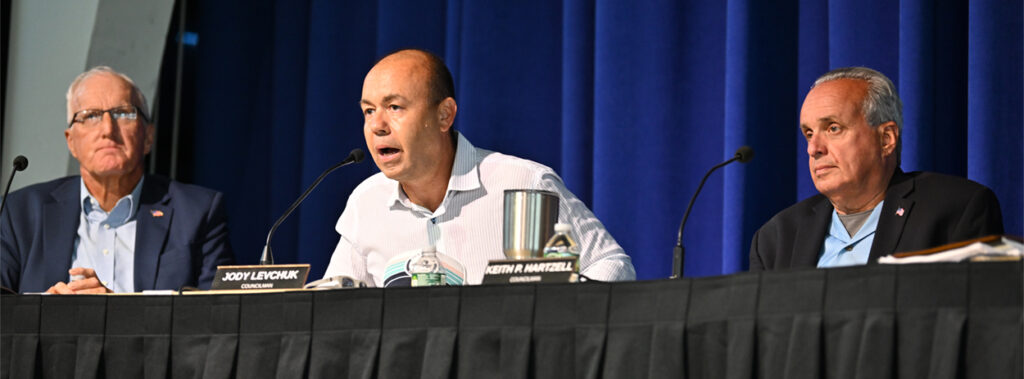
The vote came after 75 minutes of spirited public comment for and against the designation, twice prompting Third Ward City Councilman Jody Levchuk, a boardwalk businessman, to yell at speakers, asserting they were making false statements about him. (He lated apologized for his outbursts.)
The vote also came after Councilmen Sean Barnes and Keith Hartzell tried but failed to get the resolution tabled for three weeks — arguing they should wait until the new City Council is sworn in July 1.
Councilman-elect Jim Kelly, an opponent of the rehab designation, takes office July 1. Thursday night was the final meeting for At-Large Councilman Pete Madden, who has been an ardent supporter of Mita’s hotel plans.
Council first voted 5-2 against tabling the measure. Barnes and Hartzell were the only votes in favor. Later, they were the only votes against the rehab designation.
Council President Terry Crowley Jr., Vice President Madden, Fourth Ward Councilman Dave Winslow, Levchuk and At-large Councilman Tony Polcini all voted in favor of the rehab designation.
They argued it is but the first step in making progress on the site at 600 Boardwalk, where Wonderland Pier amusement park operated for nearly 60 years before closing permanently in mid-October 2024. They said the designation actually gives council more control over what is built there.
They also said they want to follow the Boardwalk Subcommittee’s recommendations on the site, which calls for an upscale hotel that doesn’t overwhelm the nearby neighborhood or change the character of the boardwalk. Mita’s plan would have a seven-story hotel atop ground-level parking.
This is the third time City Council has voted on the rehab designation.
In August 2025, council voted against sending the property to the Planning Board for its recommendation on whether it met the rehab criteria. Council reversed itself in December 2025, voting to get the Planning Board’s opinion. In January 2026, planners ended up in a 4-4 stalemate that let the rehab designation die.
The public comments followed the familiar pattern that dominated City Council and the Planning Board meeting for more than a year. Business interests pleaded with council to support the rehab designation to get something moving on the site, where the amusement rides have been quiet going into the second summer. Without the park as an attraction, business on that end of the boardwalk has suffered.
Opponents of the rehab designation have said Mita’s hotel proposal would change the character of the boardwalk and harm the neighborhood next door, and brought up allegations of conflicts of interest with city officials, including Mayor Jay Gillian and city solicitor Dorothy McCrosson. They said Madden and Levchuk should recuse themselves.
Opponents also argued that council would lose faith with the public by rushing through a vote before the new councilman was seated and only two weeks after the subcommittee made its 85-page report public.

A motion to delay
After the first session of public comment when council began discussing the rehab designation, Barnes asked council to delay the vote.
He said it wasn’t a motion to stop redevelopment, against Mita or against investment in Ocean City, but to take an extra three weeks to get the most important land use decision in Ocean City history right.
“I believe 600 Boardwalk is a once-in-a-generation opportunity” that deserves a thoughtful decision, he said. Barnes argued that the parcel doesn’t meet the intent or criteria of the rehabilitation law because it’s 300 feet of oceanfront boardwalk, not a property that is suffering deterioration or blight.
Barnes said the Boardwalk Subcommittee spent seven months coming up with recommendations on boardwalk zoning as a whole and council should spend more time evaluating them.
“Good decisions rarely are made quickly,” he said. “They’re evaluated thoroughly.”
Barnes urged his fellow council members to wait until the new council is seated. “Waiting three weeks is not unreasonable” while beginning to negotiate with Mita, he urged.
His remarks got extended applause from the audience at the Ocean City Music Pier, where the meeting was moved in anticipation of a crowd that would be too big for council chambers.
Hartzell seconded the motion to table, but Crowley, Madden, Winslow and Levchuk voted against it. The four votes were enough to stop the motion and council was about to move on, but after pressure from an attorney in the audience to get all the council members on the record, it finished the roll call with Hartzell and Barnes voting yes and Polcini voting no.
That opened another period of public comment.

Attorney explains rehabilitation designation vote
Before council voted on the rehab resolution, attorney John A. Ridgway joined council to explain. He stepped in for McCrosson, who excused herself from that portion of the meeting.
Ridgway said the rehabilitation designation is the first tool a governing body can use to create a redevelopment plan for a property.
“It is the city or the Planning Board, as directed by the city, that will write the redevelopment plan. That is key,” he said.
The designation is a mandatory step, a prerequisite that the governing body must go through if it is to form a redevelopment plan, Ridgway said. After that the city would come up with the plan.
“It is a process, after designation for rehab, that the city controls, the city writes the plan,” Ridgway said.

Crowley, Madden vote yes
The council president voted in favor, saying three different certified planners weighed in that the property meets the criteria for the rehabilitation designation. The subcommittee report, he added, is a working document that will guide council on developing what goes on the Wonderland site — it will be a smaller footprint than Mita’s proposal, will include entertainment and is respectful of neighbors in the area.
“This is the first step of the process we need to go through to see if we can get an acceptable product” for the property, Crowley said. “If we don’t get an acceptable product, we won’t go forward.”
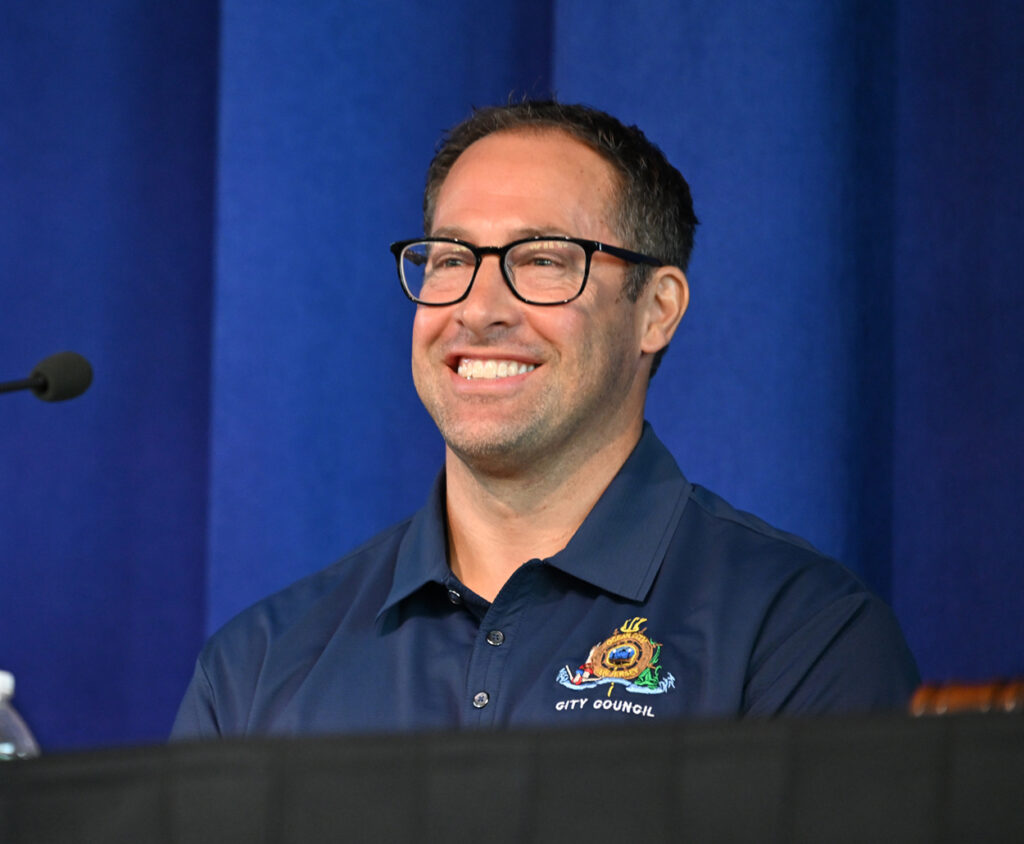
Madden simply voted in favor of the resolution. Later he added he has been supportive of the hotel project from the beginning and is looking forward to having something very special on the property.
Winslow, Levchuk vote yes
Winslow and Levchuk voted yes next, providing the other votes needed to pass the rehabilitation designation.
Winslow, who chaired the Boardwalk Subcommittee, said the vote will just get the process started and that the city will not lose control of what is built there.
“Development at 600 Boardwalk is a very complex issue,” he said, arguing there is an urgency to get something going there before the property deteriorates further and becomes unsafe. City Council will be in a position to negotiate some type of “spectacular development” at the site that would then go to the Planning Board for final review.

Winslow said the goal of his subcommittee’s report is to ensure whatever is built takes the neighborhood into consideration.
“The goal is for the property to serve as an anchor and restore the economic ecosystem disrupted by the closure of Wonderland,” he said. He plans to use the report’s recommendations to guide the city’s negotiations on what is built there.
Levchuk apologized first, saying it was unbecoming of him to yell during public comment, even though speakers were wrong to say he owned property on the boardwalk and therefore had a conflict of interest. (His father, Paul Levchuk, spoke up during the second public comment to defend his son, saying he and his wife own all the boardwalk properties and the councilman pays them rent for the businesses he operates on the boardwalk.)
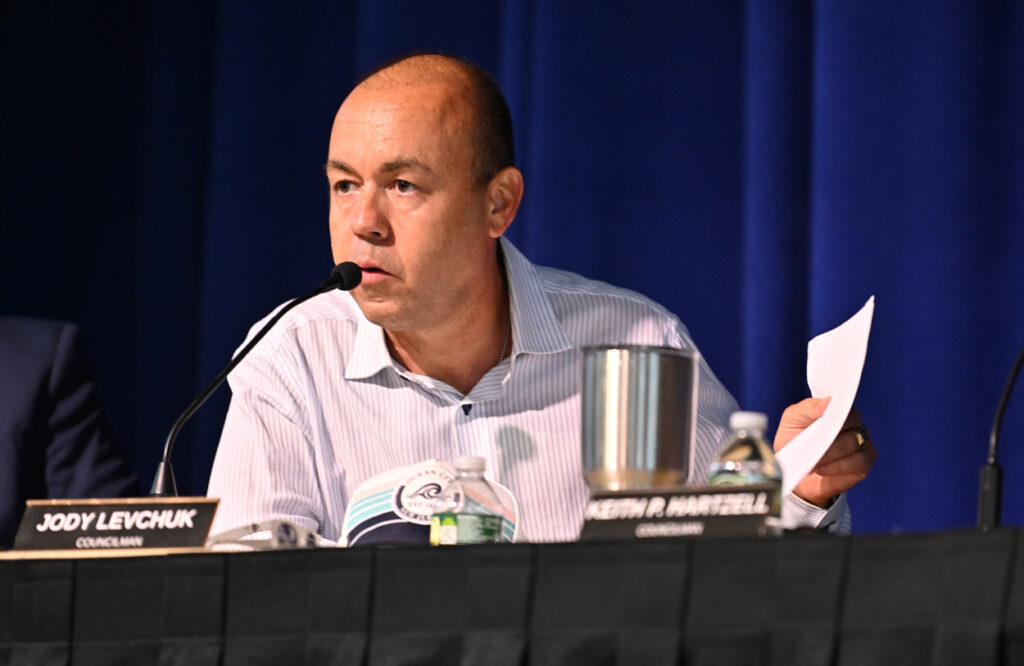
Levchuk said it had been difficult for him since he sent out an email on Monday about the upcoming vote, but that he wanted as many people as possible to know what was coming and to weigh in.
“It’s been a rough week, but it’s all worth it because we’re going to come together with something great,” he said.
Levchuk and others said their vote meant no disrespect to Councilman-elect Kelly and he argued that businesses at the north end of the boardwalk have been suffering without an anchor there.
“We’re at a place right now where I almost feel it would be hypocritical to not say yes,” Levchuk said. “This isn’t about a hotel or any particular project. Everybody up here has come to realize there cannot be any advancement on that particular property” without the designation. “The time for action is now,” he said.

Hartzell, Barnes vote no
Hartzell said he had been warning about what would happen at the Wonderland property for years.
His opposition to the prospect of a high-rise hotel at Wonderland was a cornerstone of his losing mayoral bid in 2022. He also unsuccessfully ran for mayor again this year, again losing to four-time incumbent Jay Gillian, who owned the Wonderland property until selling it to Mita in early 2021 after banks foreclosed on $8 million in loans.
Gillian leased the property back from Mita for four more summers before closing the amusement park permanently in mid-October 2024, saying it was no longer financially viable.
Hartzell said he learned back in September 2021 that the intent had always been for Mita to build a high-rise hotel and to close the park.
He referenced a consulting agreement between Mita and Gillian with a large financial incentive as evidence that was the plan all along.
“All the intentions are there and all the evidence is there that this was never going to be anything but where we are today,” he said.
Hartzell said going forward would set a precedent for others to build hotels.
“I can’t change the broken promises and the financial entanglements, but they’re there,” he said, alleging there has been repeated influence on the project by the mayor.
Hartzell also argued that the city was giving up its leverage over what goes on the property by approving the rehab designation.
As he stated in his motion to table the resolution, Barnes said he still believed the rehab designation did not apply to the boardwalk property and that it was the wrong process to use.
Polcini votes yes
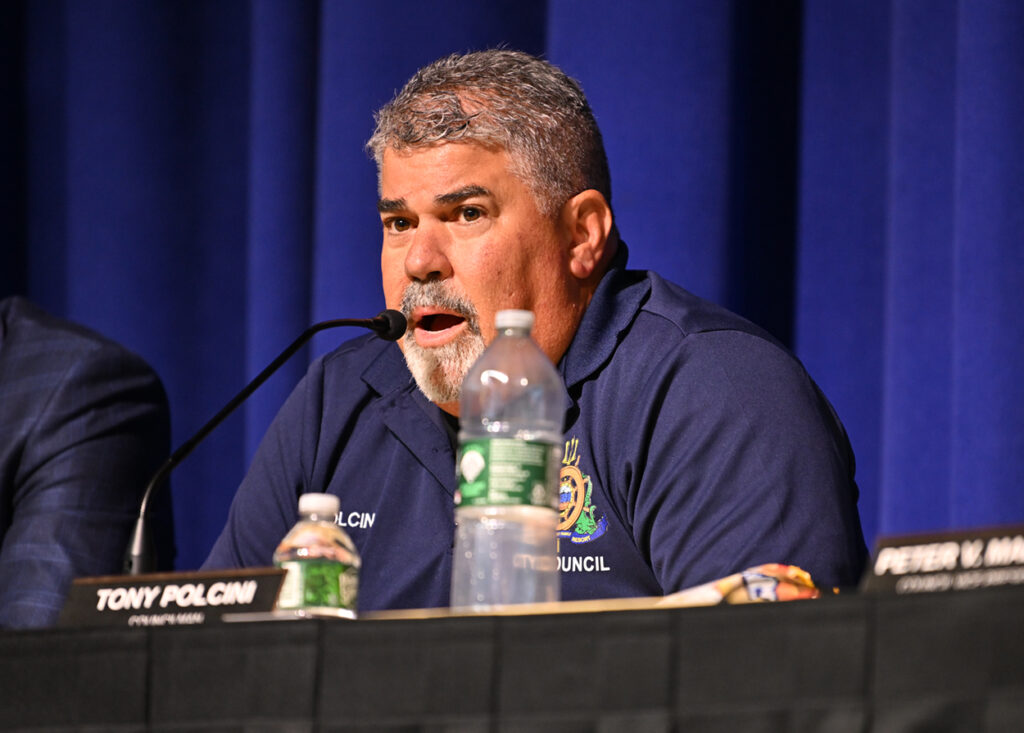
Polcini added the fifth vote in favor of the resolution, saying it was the right process and will give council the ability to negotiate what goes on the site.
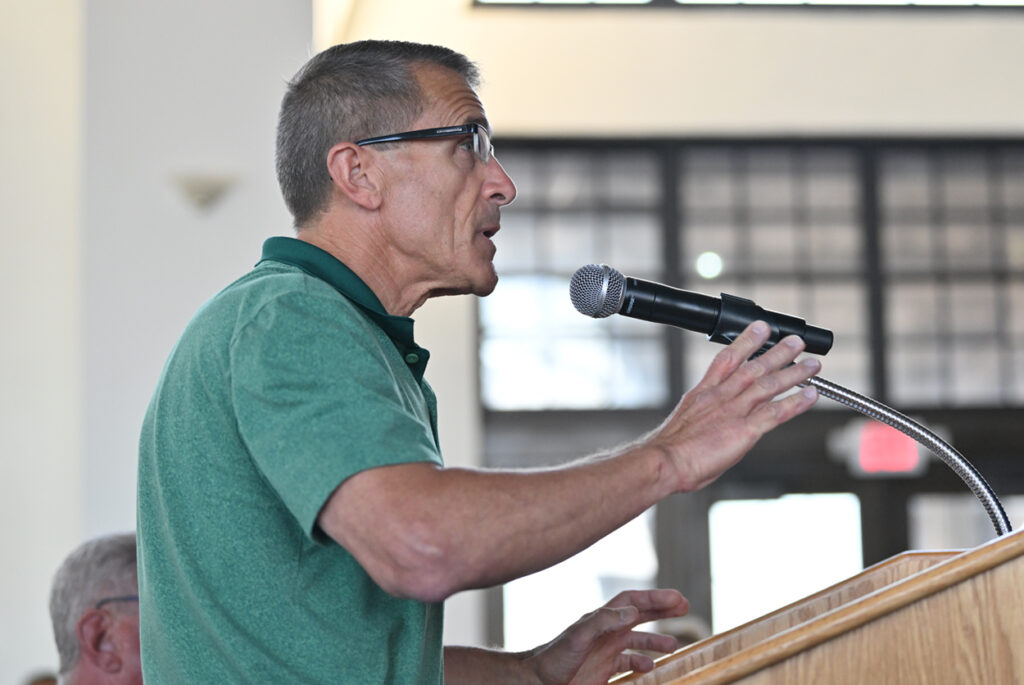
Councilman-elect weighs in
During public comment, Kelly asked council to delay a vote on rehabilitation, saying not to do so would disenfranchise the voters from all the wards who elected him in May.
The decision, he said, shouldn’t be made six days before the new council is seated. “There is no urgency to put this on tonight’s agenda,” he said. “Wait until I am sworn in next week.”
– STORY and PHOTOS by DAVID NAHAN/Sentinel staff
At top, City Councilman Jody Levchuk, center, flanked by Councilman Dave Winslow, left, and Keith Hartzell.