Park includes 27 restored buildings, live performers
COLD SPRING — Visit Historic Cold Spring Village, located in Lower Township, and take a step back in time to the 1800s.
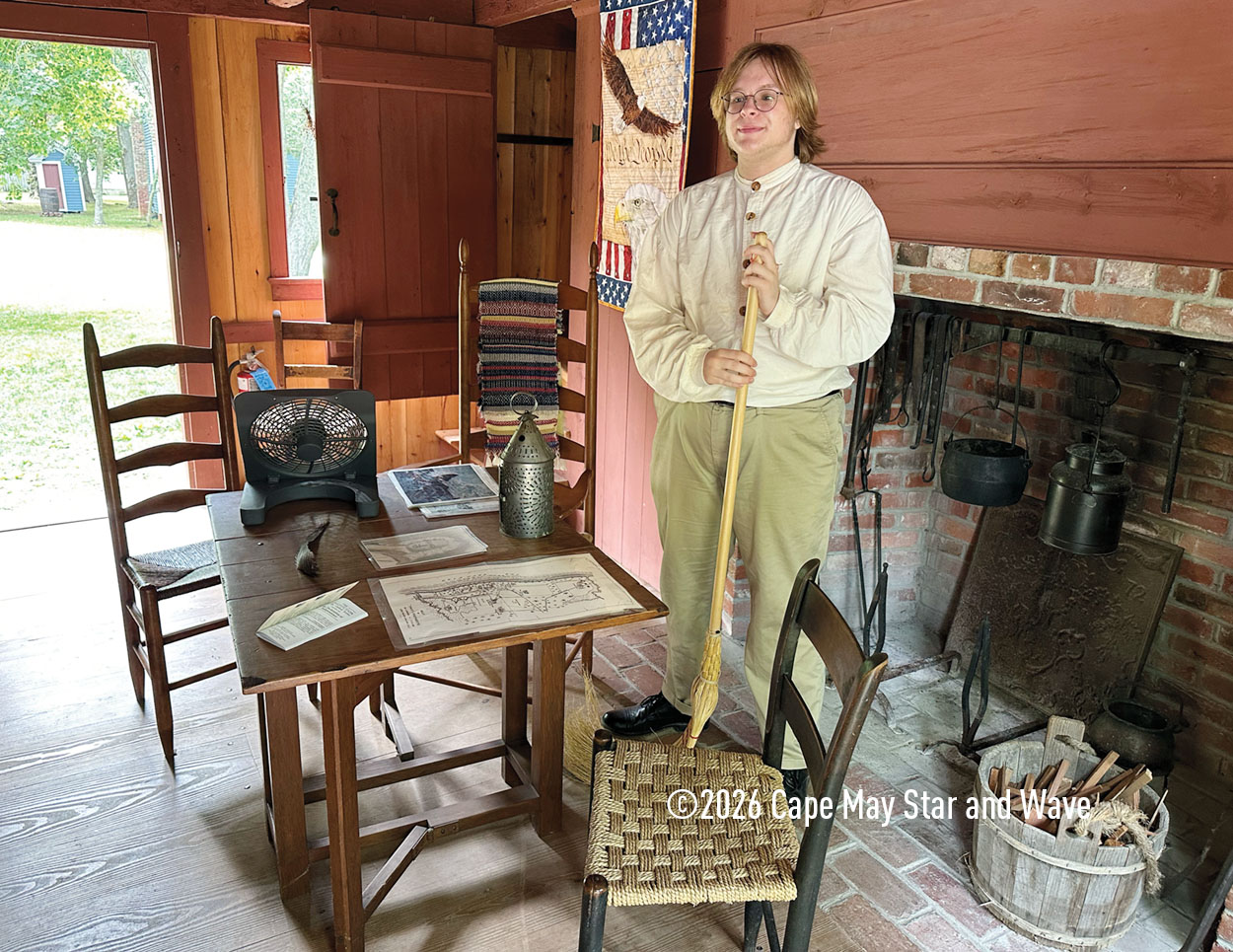
The sprawling park includes 27 historic buildings, including a one-room schoolhouse, a former stagecoach stop and a blacksmith shop. During the summer, artisans in period clothing demonstrate trades and crafts from “the age of homespun.”
Cold Spring, a thriving town in the 1800s, was named for the freshwater spring that bubbled up through the salt marshes. By the mid-1800s, there were two churches, two stores, 40 homes and a tavern in Cold Spring. Historic Cold Spring Village recreates a similar town. The village is billed as the largest open air Early American Living History Museum in New Jersey.
The village began in 1973 when Dr. Joseph Salvatore and his wife, Annie, bought the Cold Spring Grange Hall (c. 1912), the only building in the village still in its original location.
They set about assembling a collection of 18th and 19th century buildings from Cape May and Cumberland counties on 30 acres of wooded land between Routes 9 and 626. In 1981, the village was opened to the public. It is now operated by the Historic Cold Spring Village Foundation, a private, non-profit corporation.
Take a tour
Stop by the Welcome Center (c. 1894) at the Route 9 entrance to the museum. Originally a Junior Order of United American Mechanics Hall and later the Lower Township Municipal Hall, the Welcome Center features an extensive history exhibit.
The village’s houses represent a diversity of vernacular (everyday) architecture, which uses local construction materials and reflects local traditions.
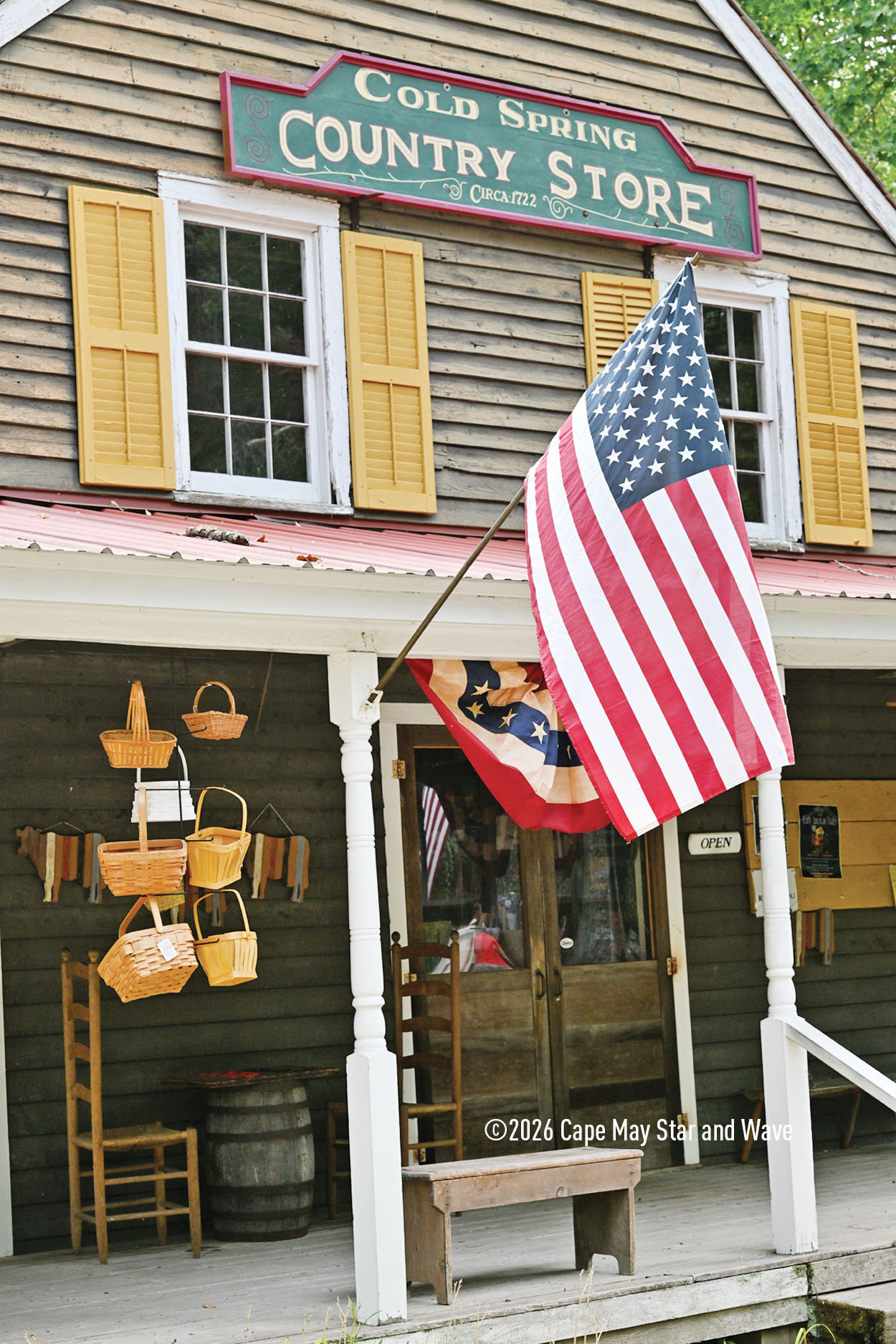
The oldest are Coxe Hall Cottage (c. 1691) and the James Hathorn House (c. 1722/1780)/Country Store.
Both are examples of heavy timber frame architecture — large framing pieces are held together with pegs rather than nails.
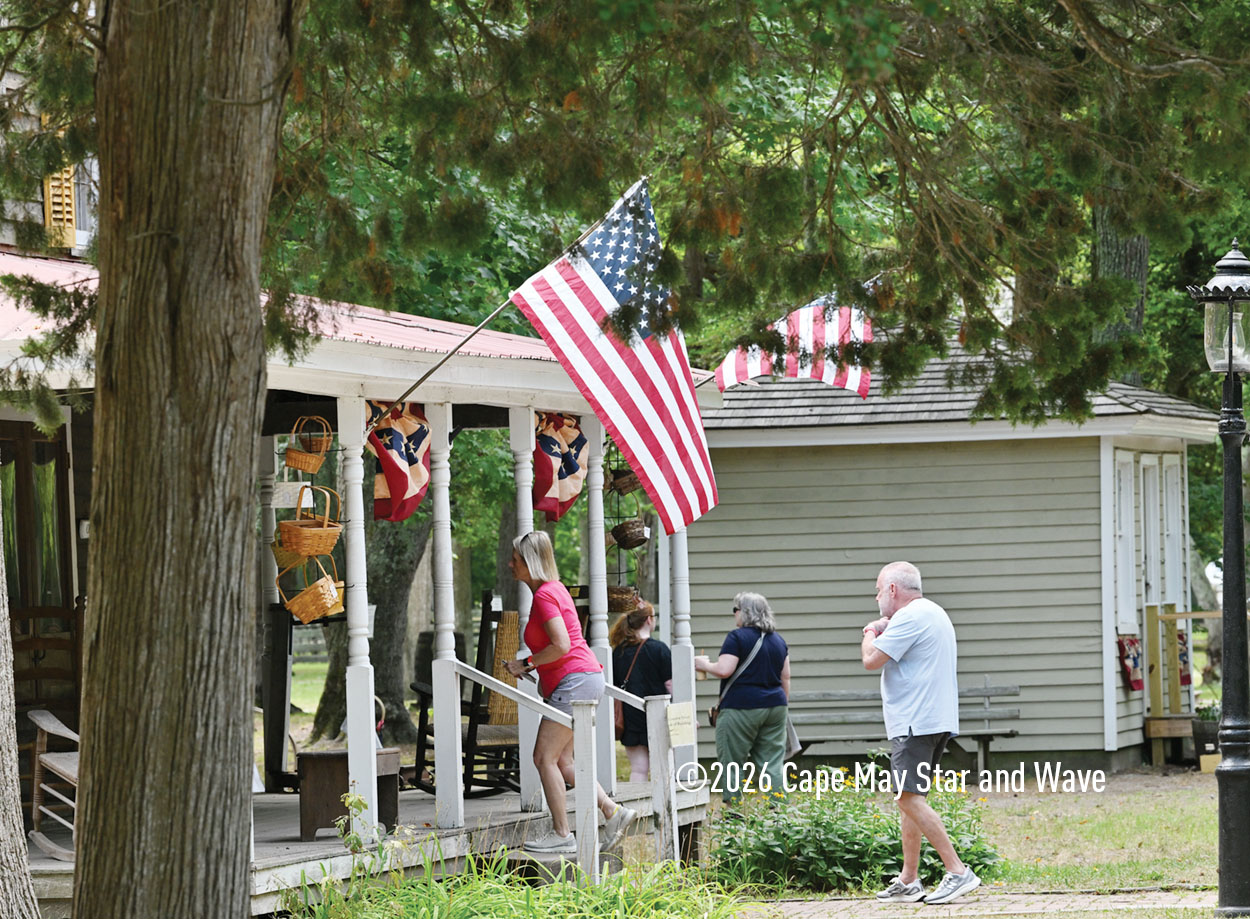
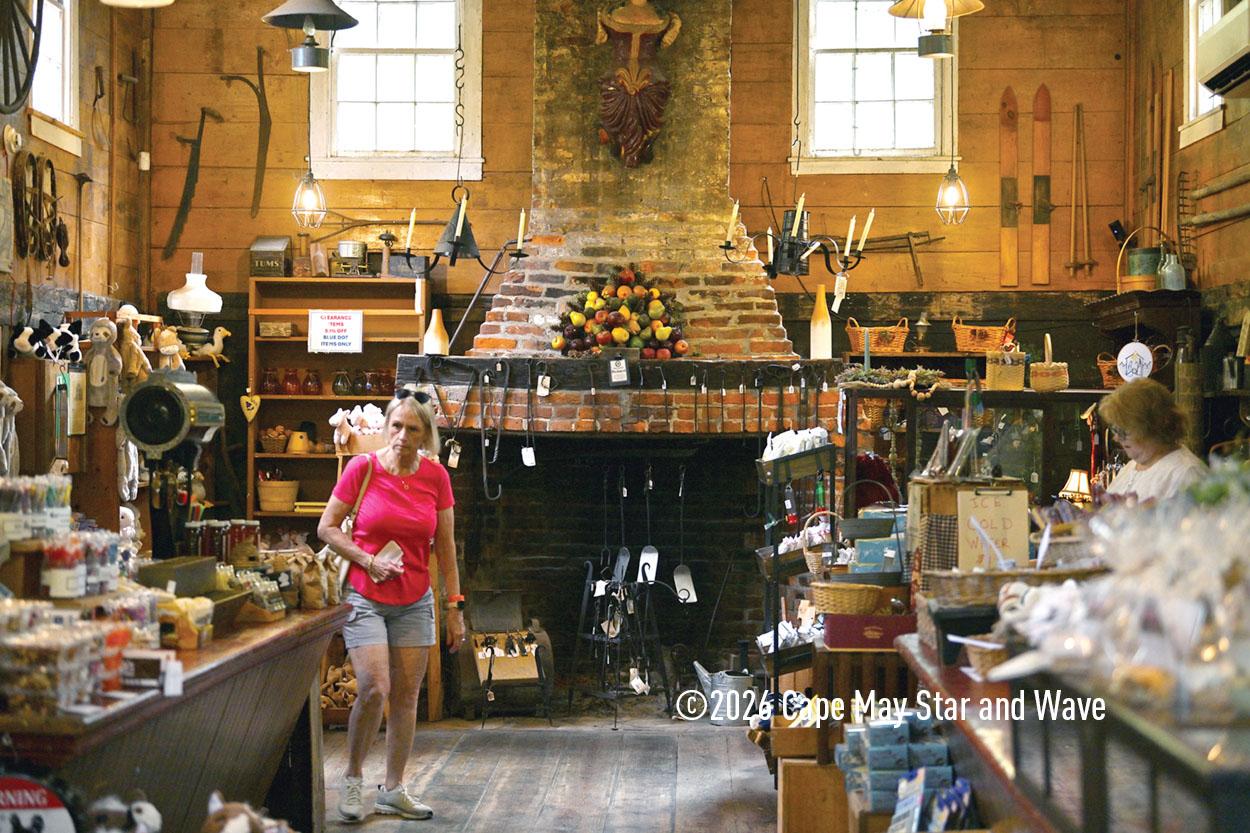
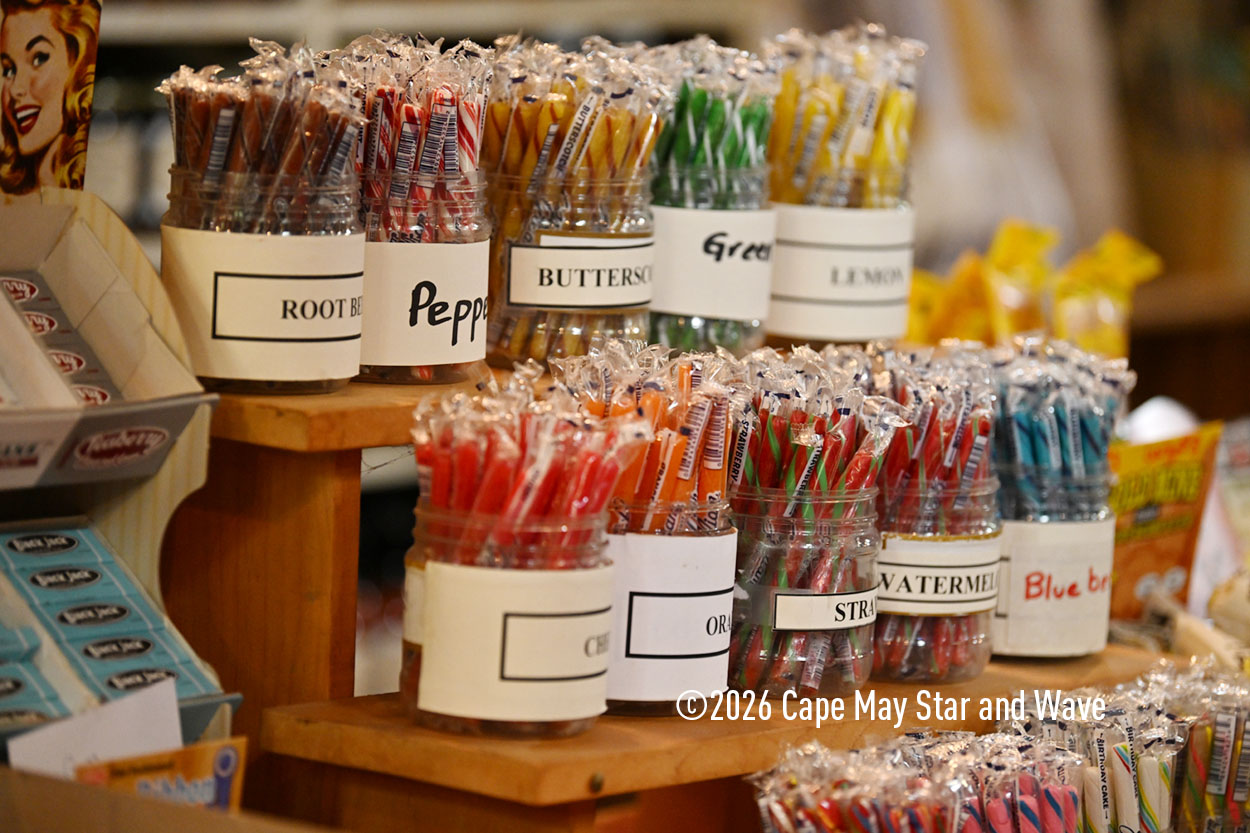
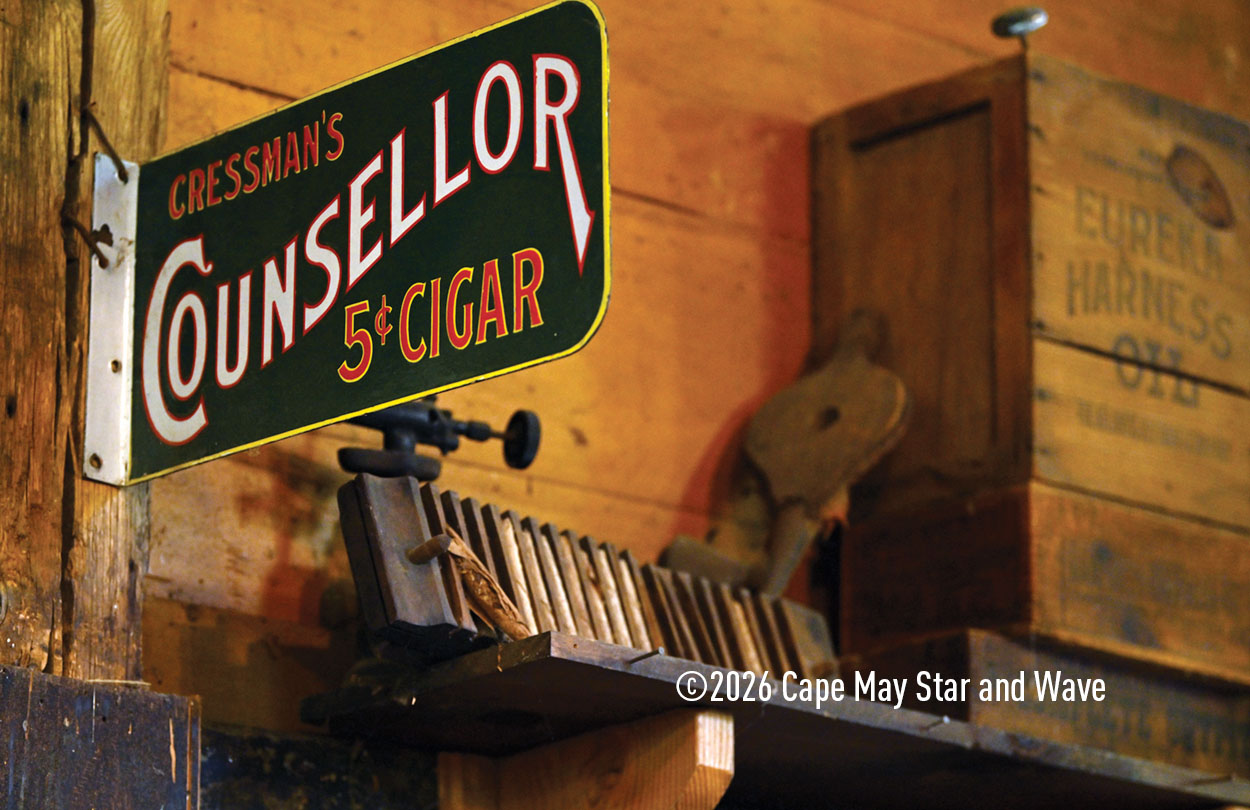
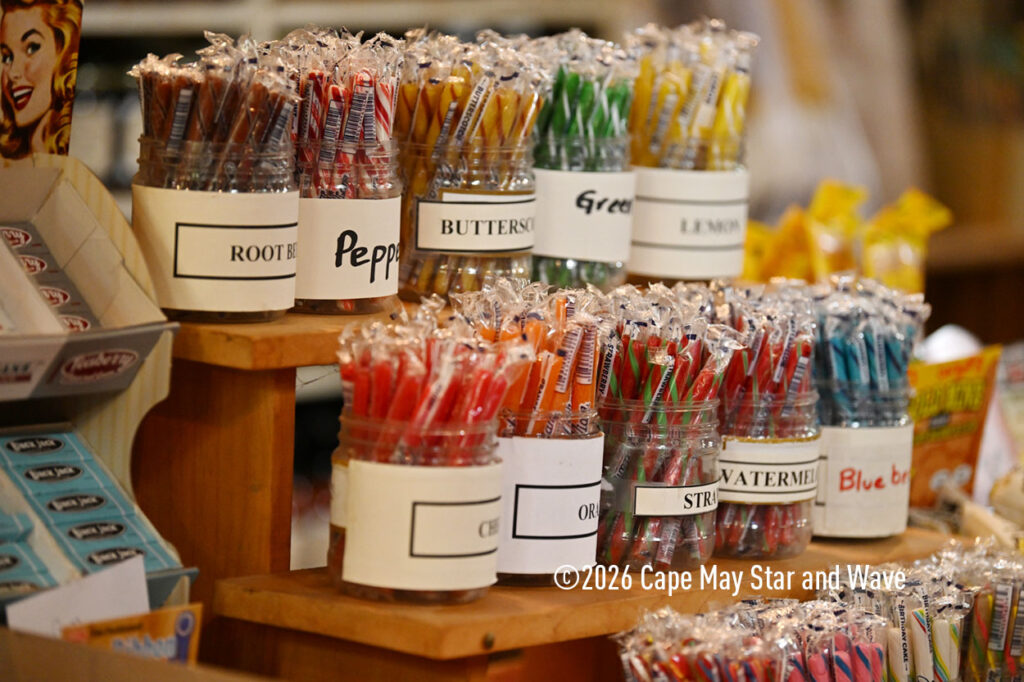
At Coxe Hall, visitors can experience the living quarters of a typical family in an early rural community. Originally a house built in two parts, the Hathorn House/Country Store sells the village artisans’ wares plus books, candy, heritage food, toys, housewares and more.
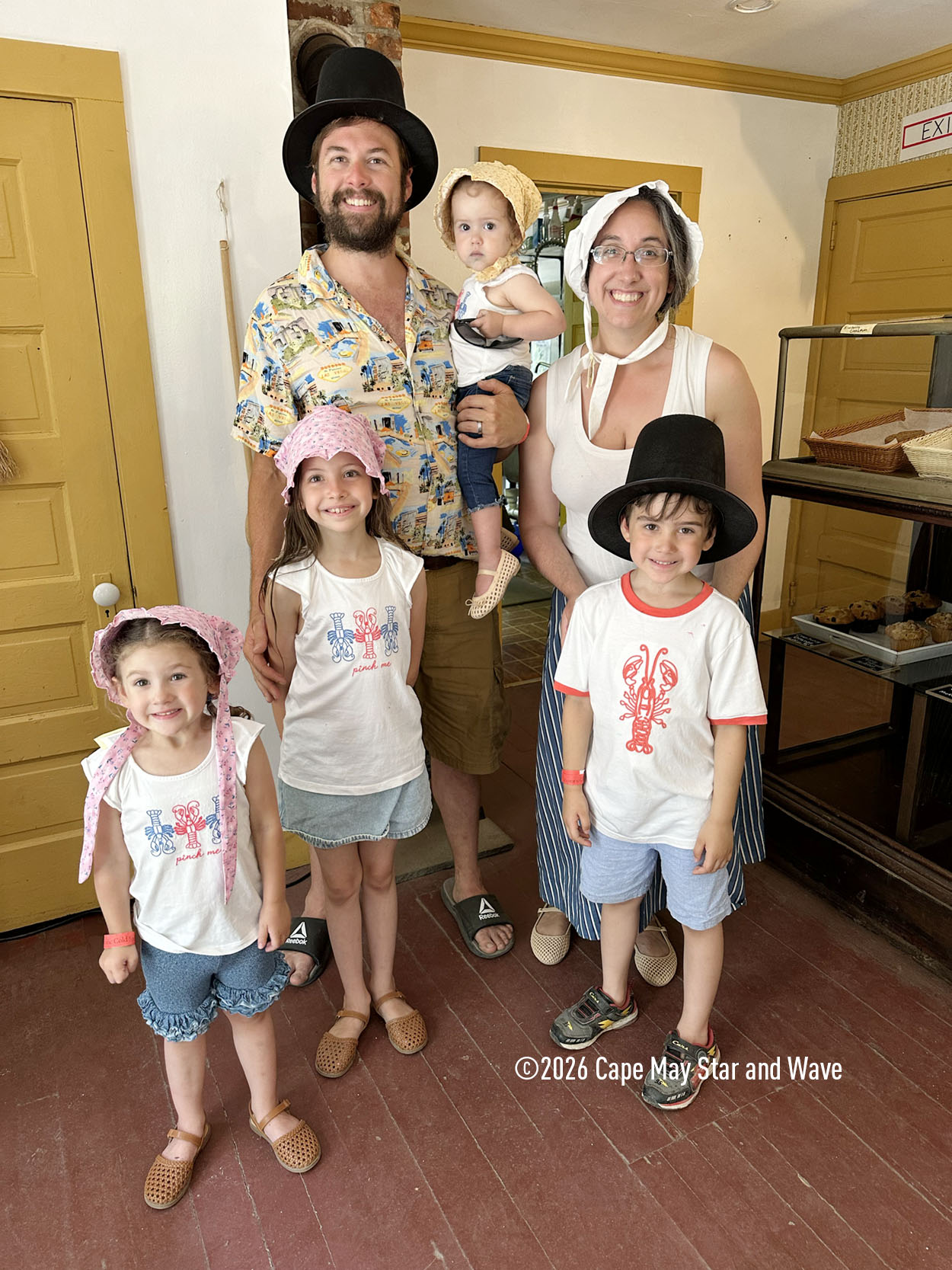
During a recent visit, Amandalynn O’Neill and family got into the spirit of the village. She bought ruffled bonnets for her daughters, Mildred, 7, Frances, 3, and Isabella, 1, and stovepipe hats for her husband Kyle and their son Kyle Jr. at the Country Store. The O’Neill family, residents of Booton, who were vacationing nearby, had planned the village visit for their “one beach day off.”
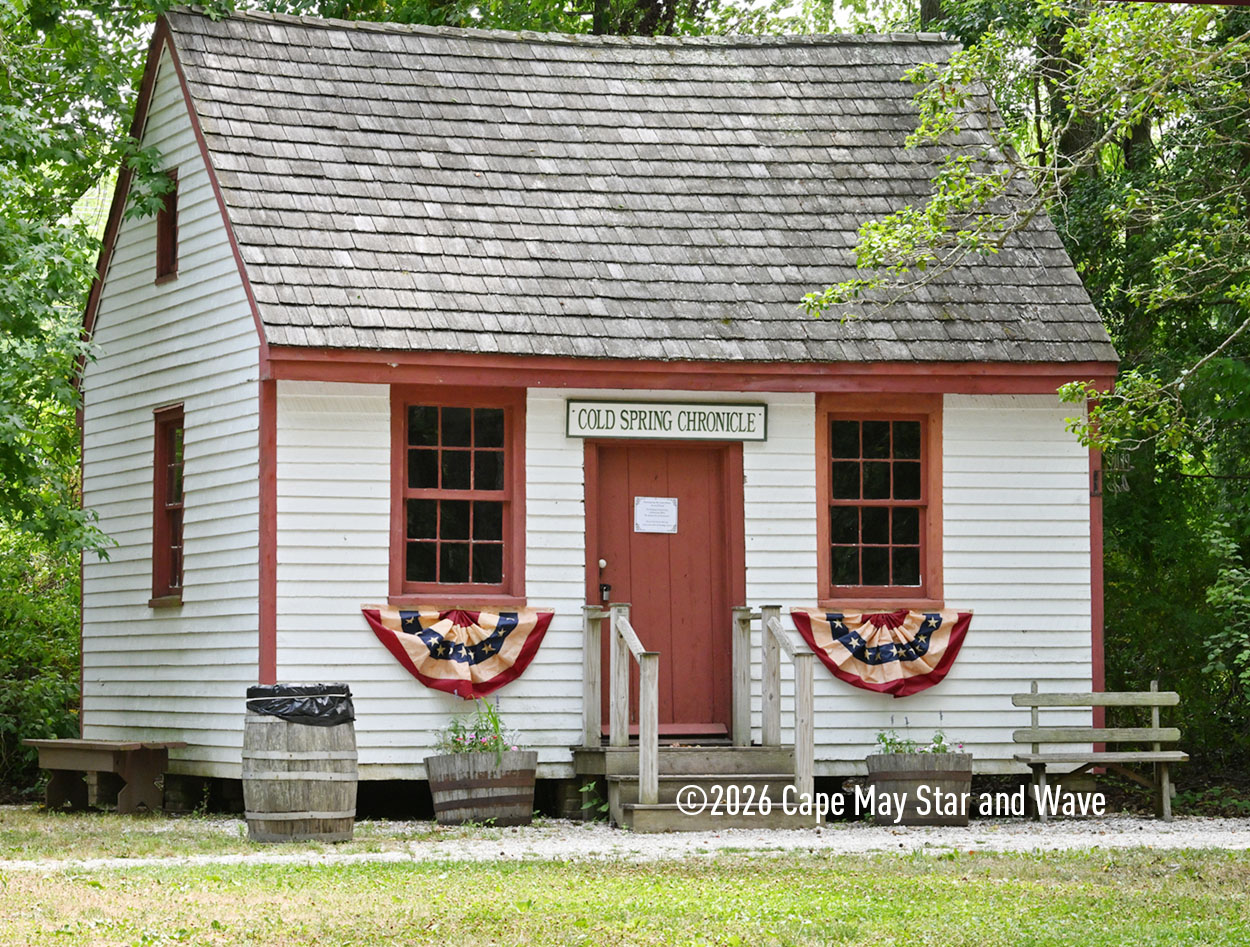
At the Spicer Leaming House (c. 1800), visitors can watch the woman of the house perform daily chores such as cooking Johnny Cakes or stew. The building, with two rooms per floor, represents houses built by well-to-do Cape May County residents while the one-room Rev. David Gandy House (c. 1830) is an example of humbler dwellings. It now houses a print shop.
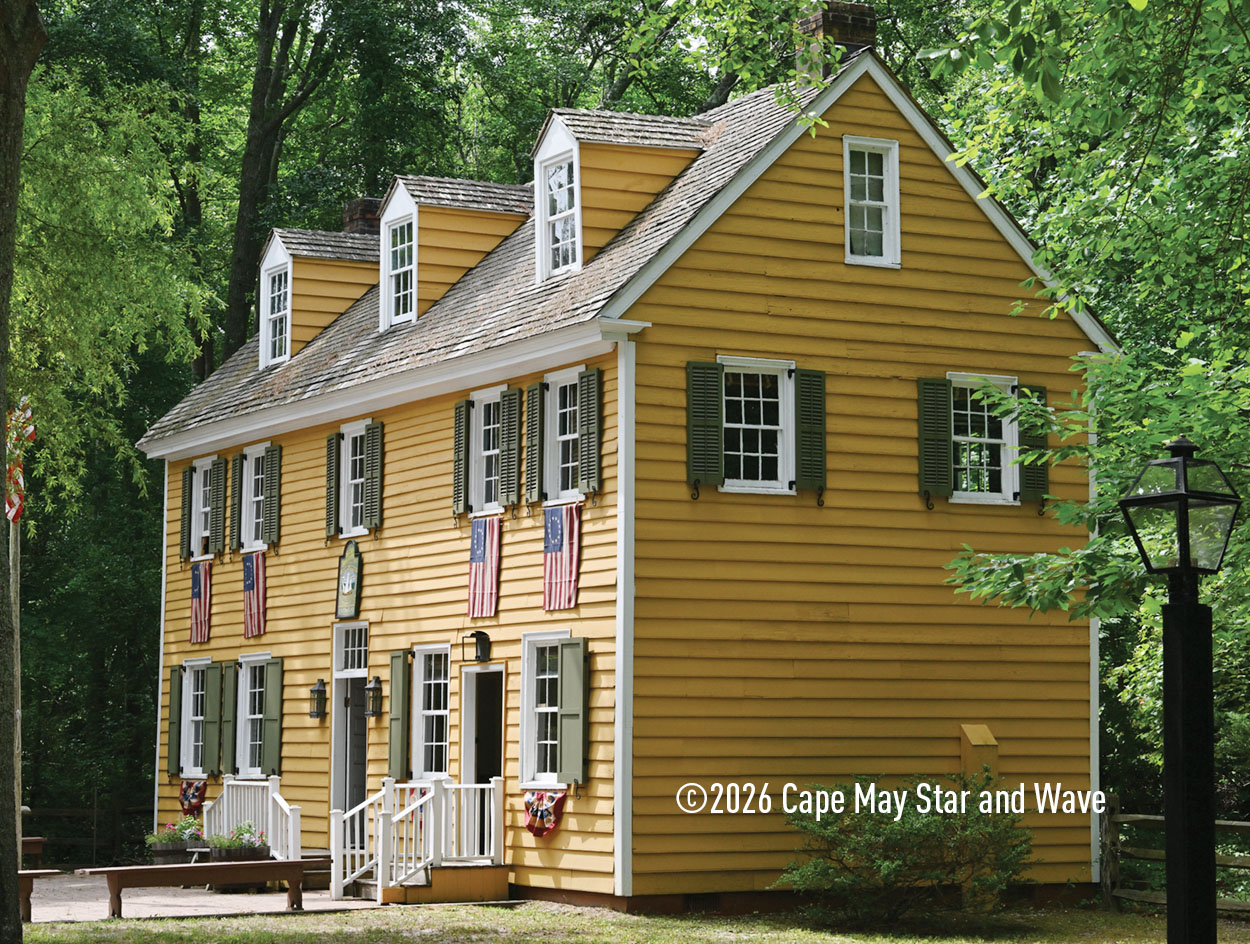
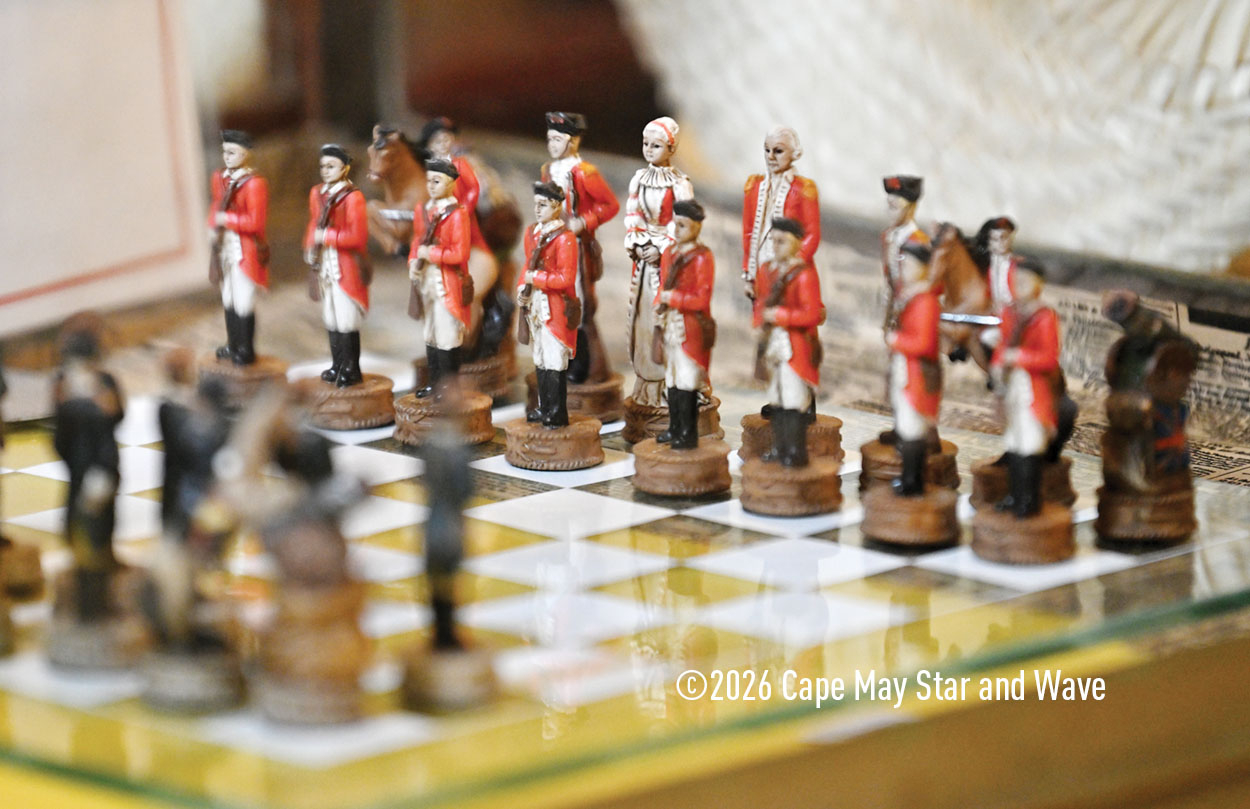
The Dennisville Inn, built in 1836, features a restored tavern and dining room. Travelers once quenched their thirst with mulled cider and alcoholic punch at this former stagecoach stop. Visitors can try their hands at tavern games and chat with the innkeeper.
While touring the Dennisville Inn with friends, Victoria Gellis, of Brooklyn, N.Y., said, “It’s my birthday, so I got to decide where I wanted to go.” Gellis said she picked the village because “it lets you connect to the history of the sea as the center of the economy.”
Originally the home of a ship carpenter, and later a shoemaker, the Corson-Hand House (c. 1837) features an interpreter who demonstrates spinning and weaving wool.
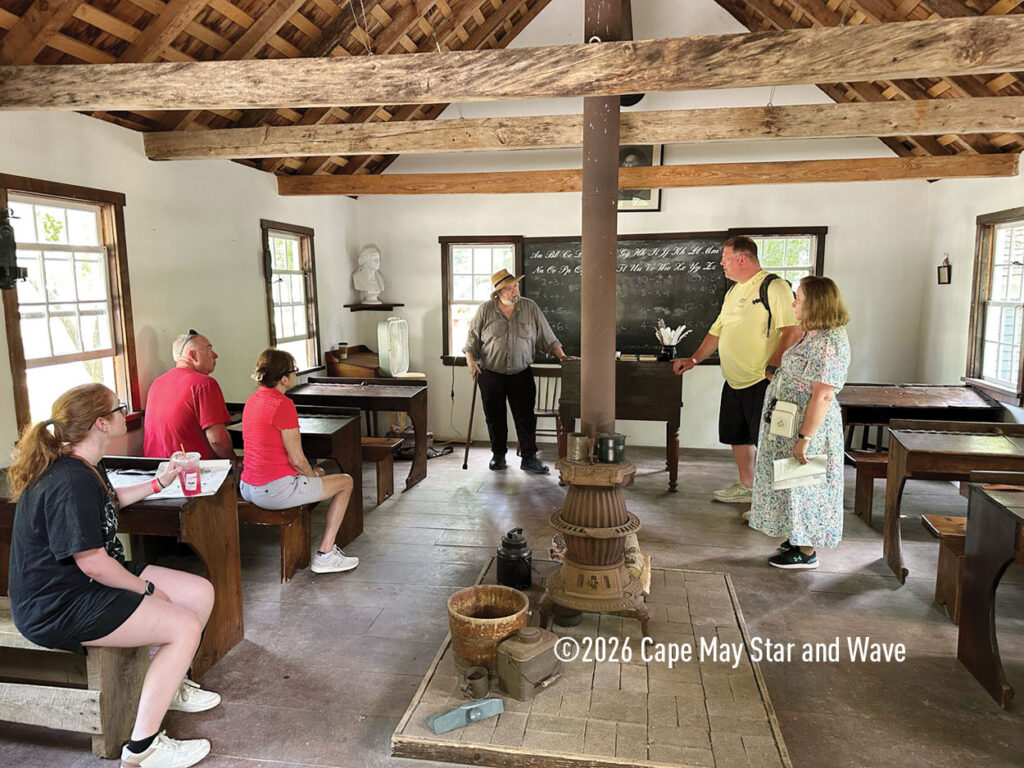
One-room schoolhouse
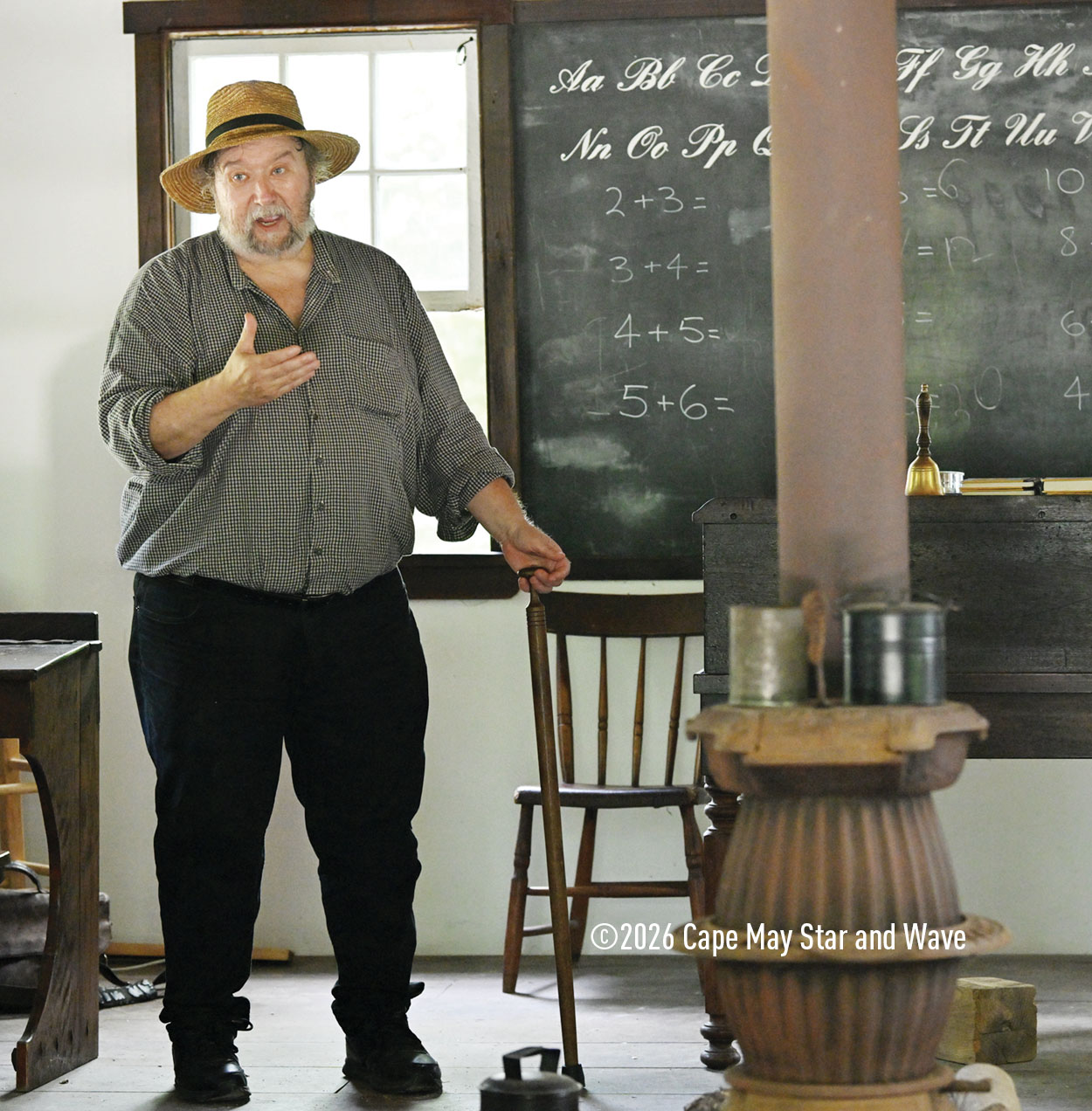
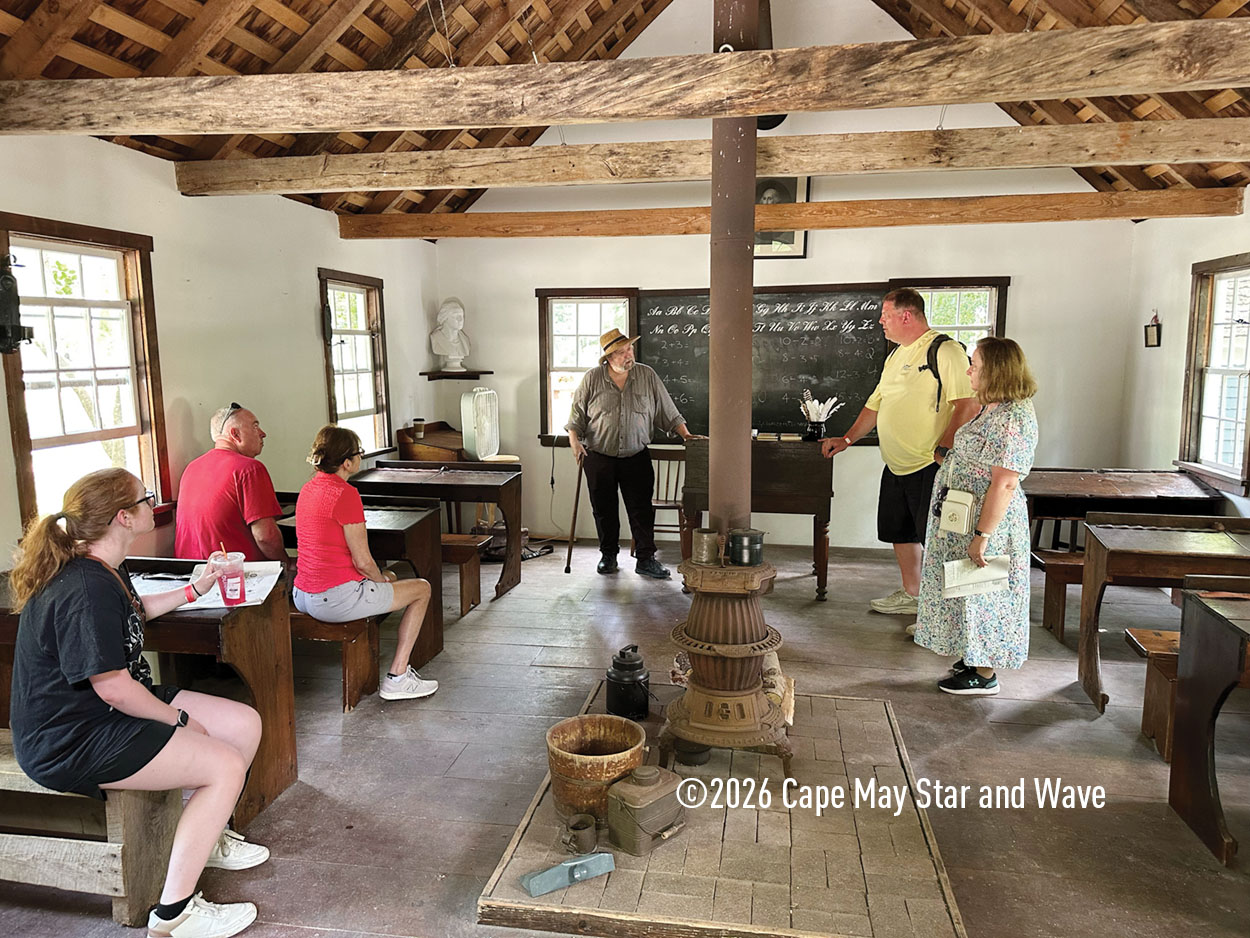
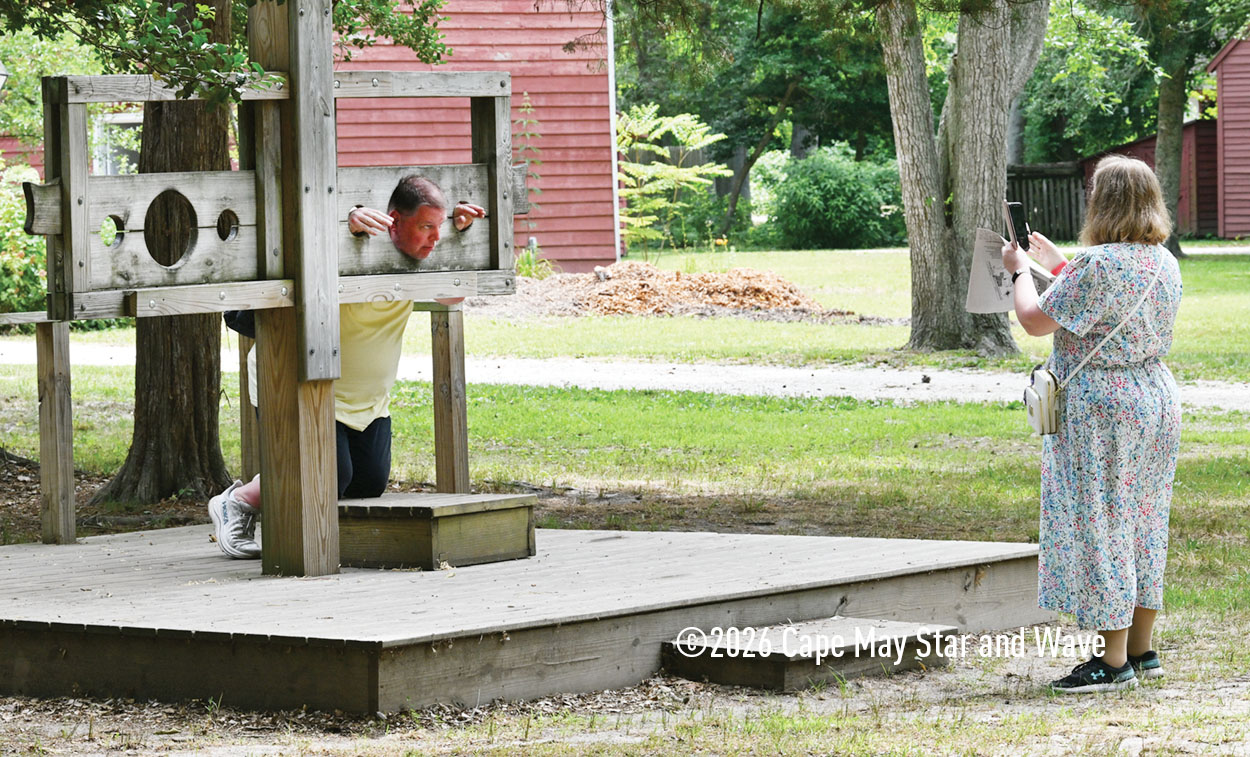
At the Marshallville School (c. 1850), the schoolmaster or schoolmistress taught students in grades one to eight. Children arrived after doing their morning chores. As one schoolteacher explained, students’ families needed to provide pens, ink, paper — even desks. Books were in scarce supply. Students learned reading, writing and cyphering (mathematics). Children who visit the Marshallville School can practice cursive writing with a quill pen, and visitors can even try on the dunce cap.
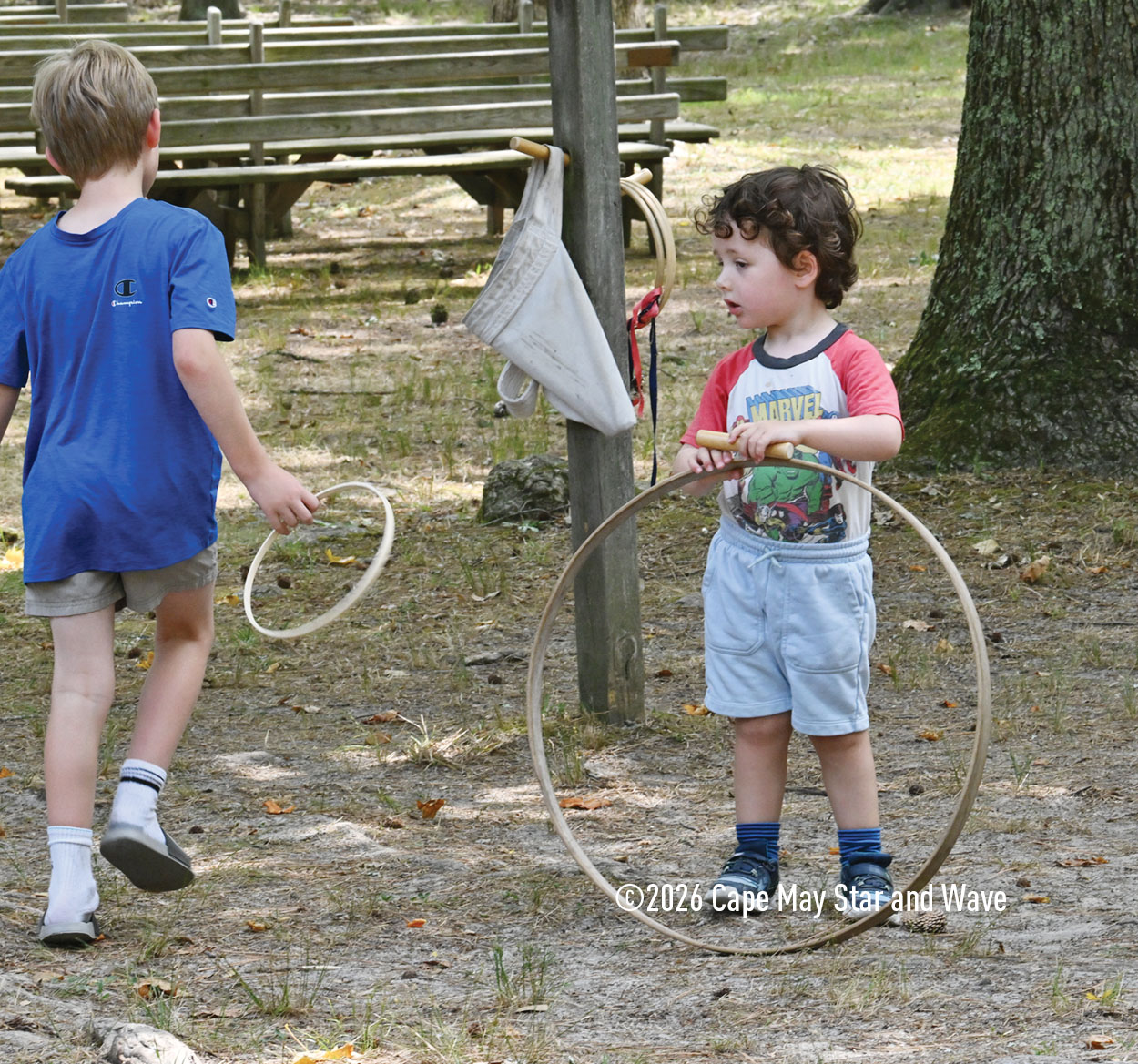
Children’s activities, including games and craft workshops, are held nearby at what used to be the Cape May Point Jail.
Trade shops
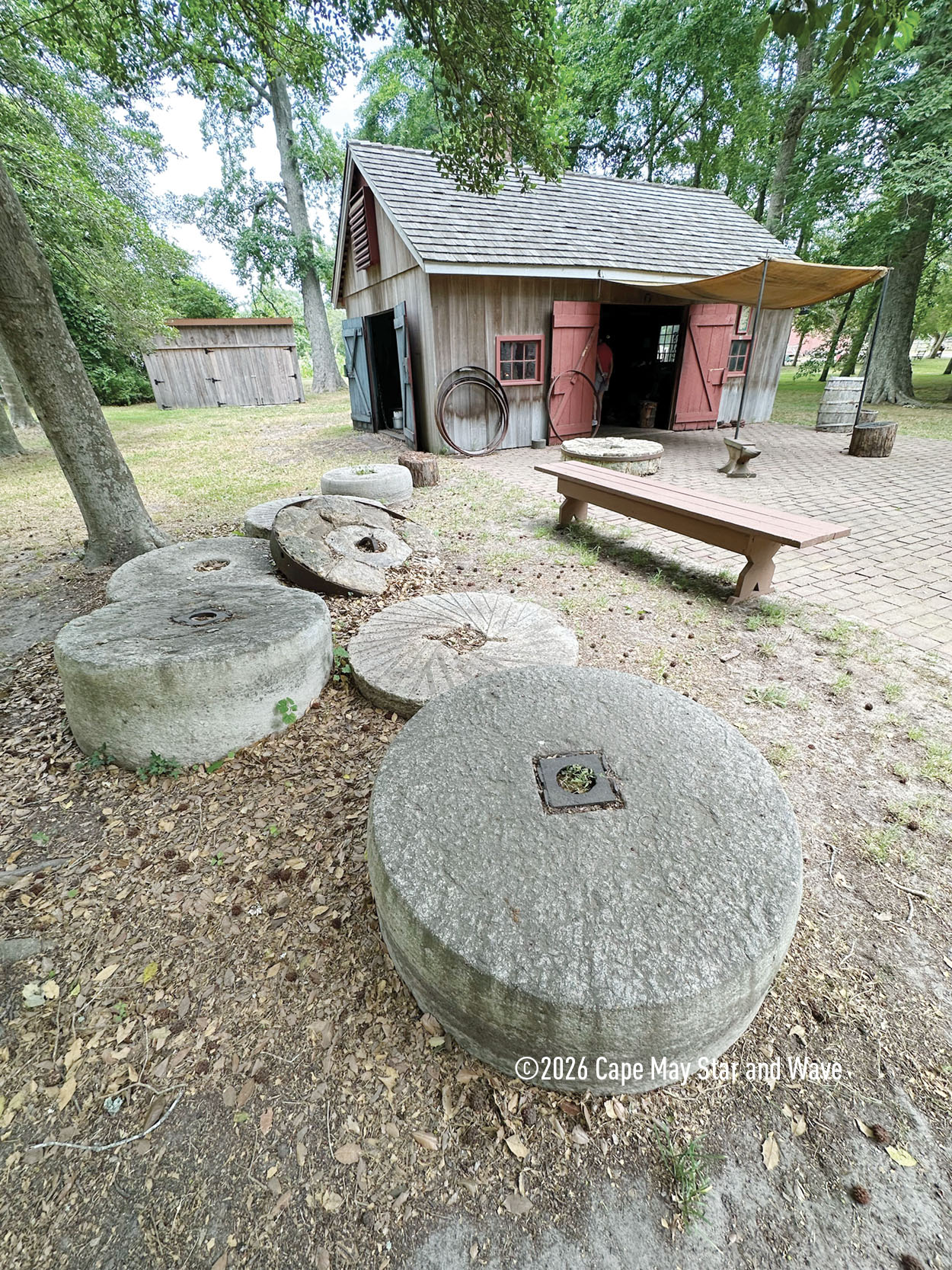
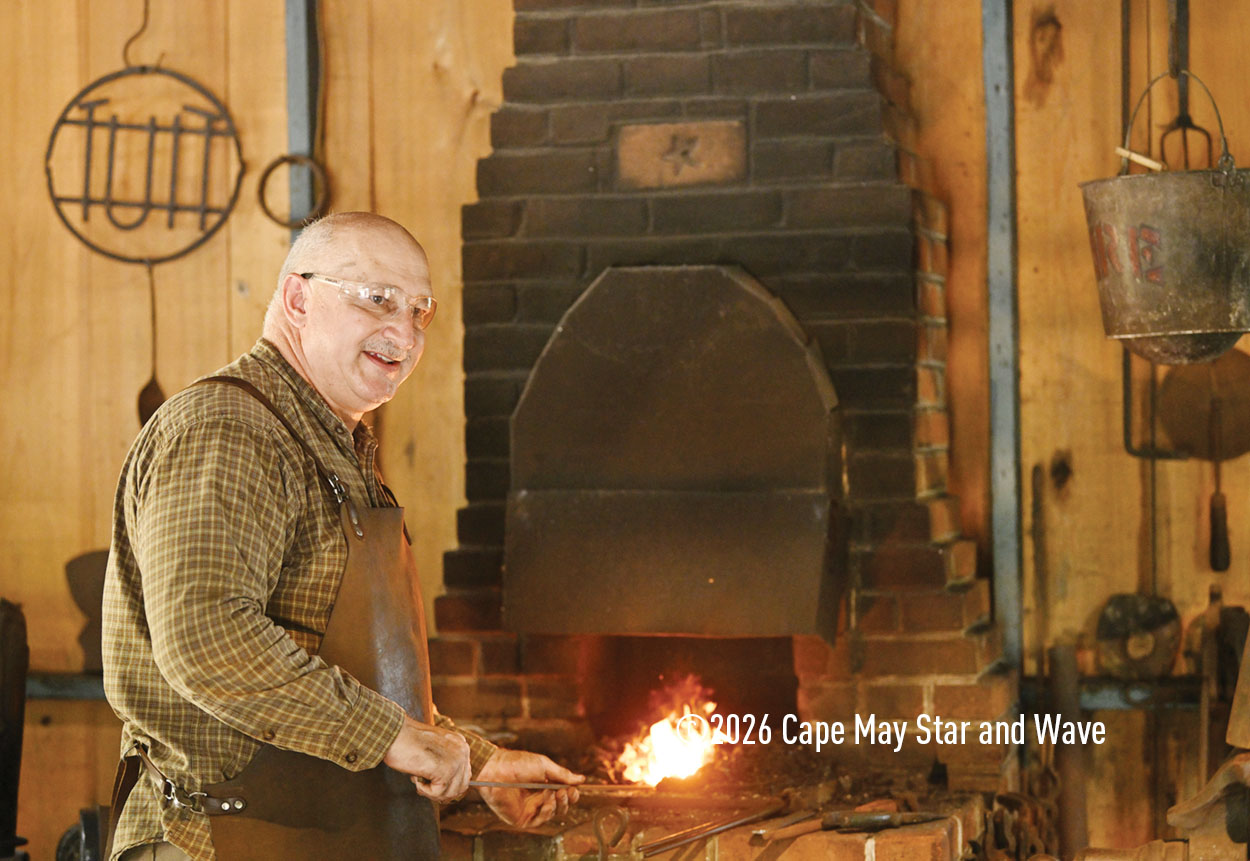
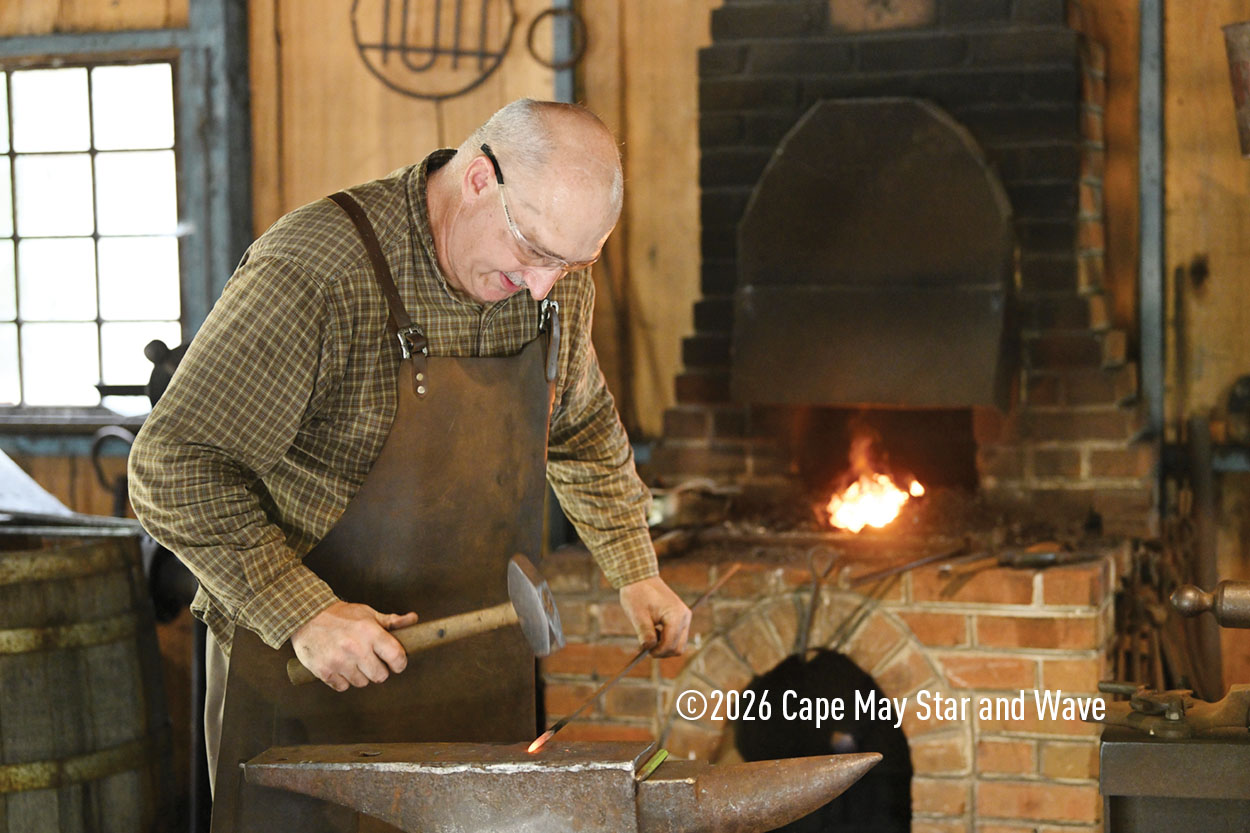
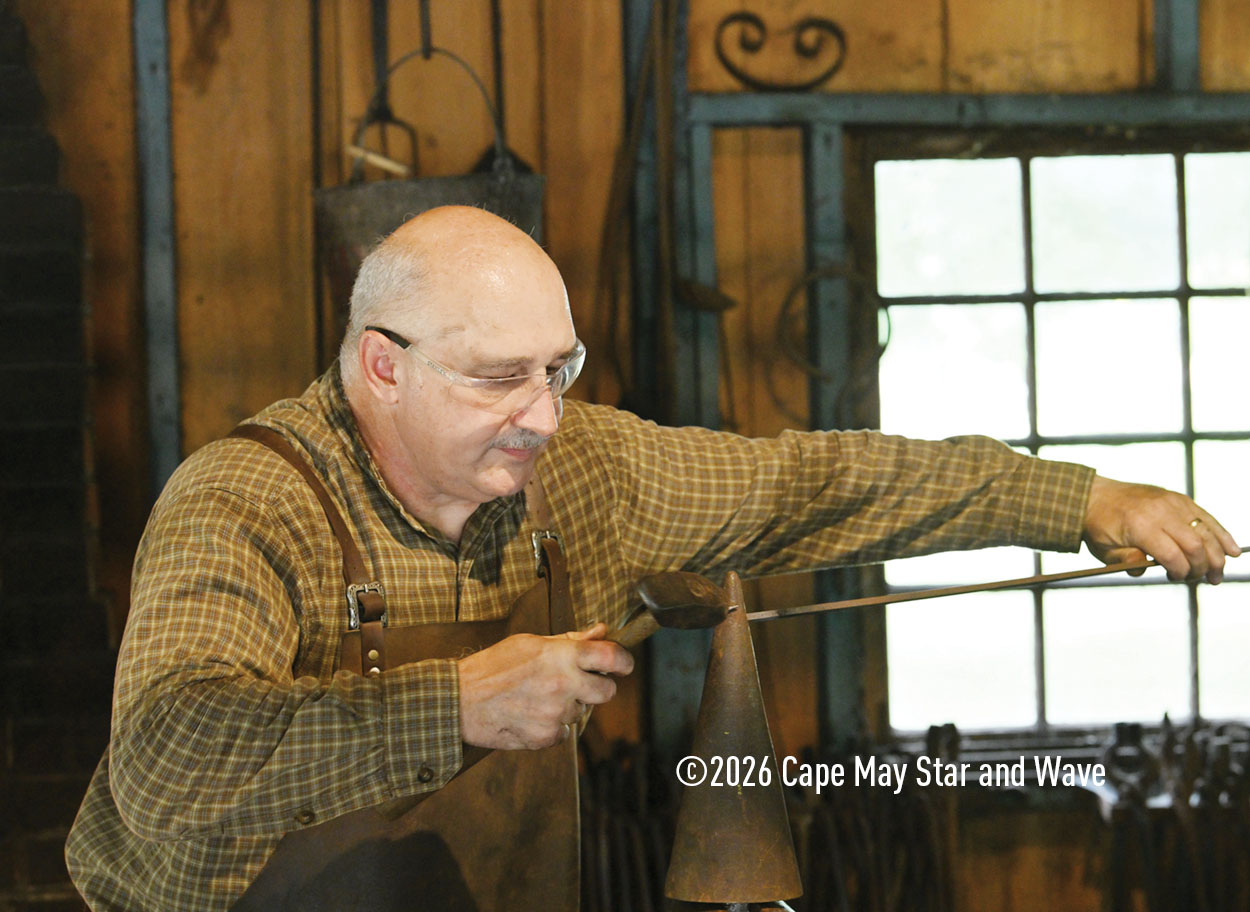
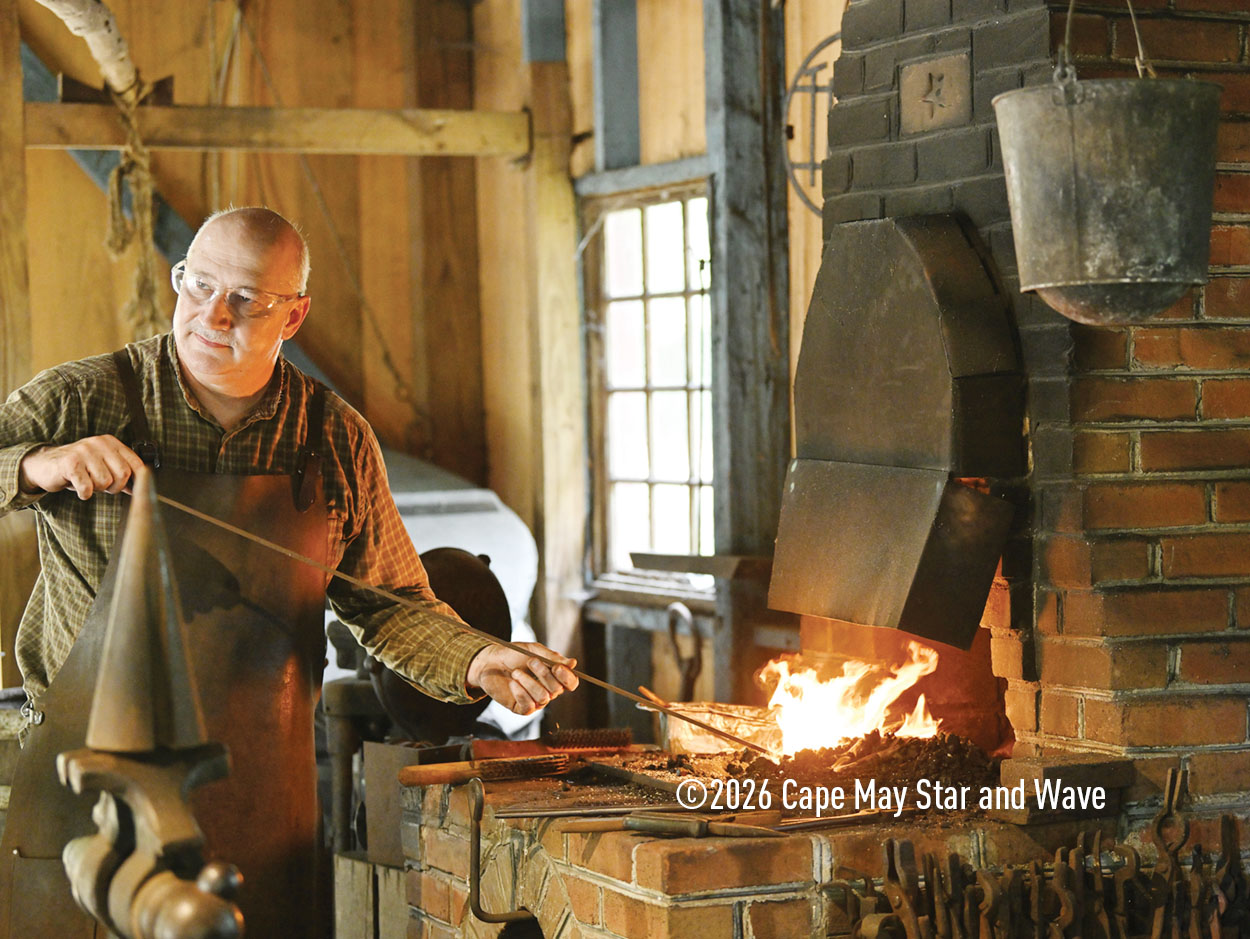
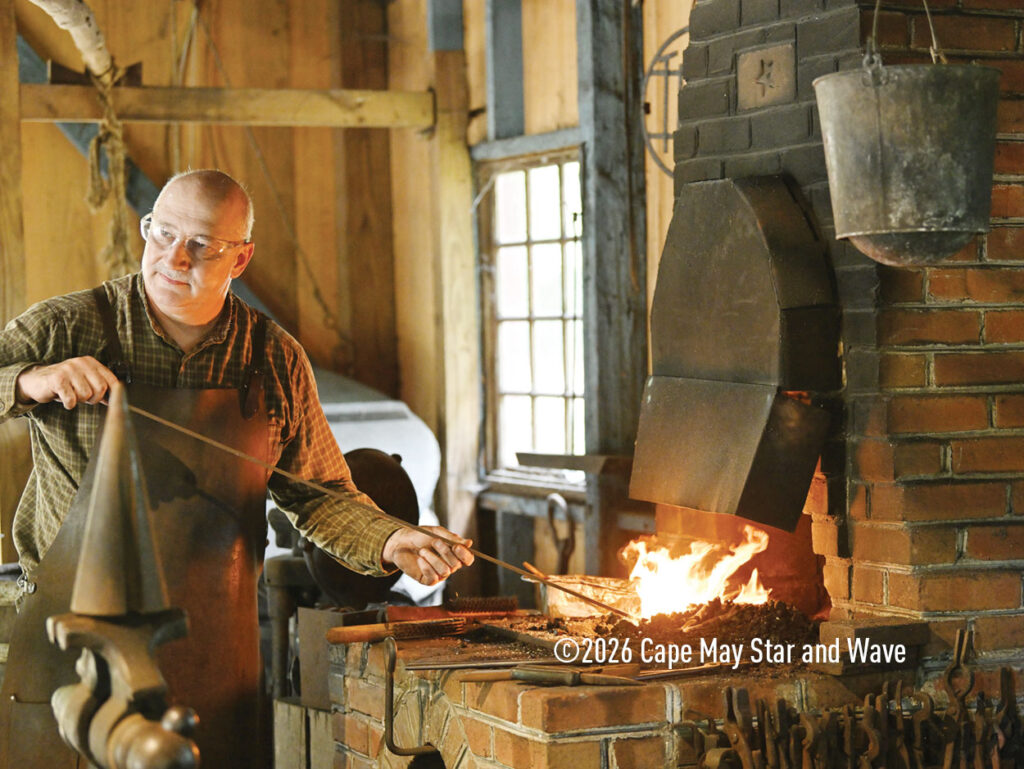
At the John Finley Blacksmith Shop (c. 1886), originally located in Goshen, one of Cape May County’s shipbuilding towns, the working blacksmith forges household items. The blacksmith forged barbecue utensils for visitors Dr. John Fafetto and his partner, Marcia Kennedy, Allentown, Pa., residents with a place in Diamond Beach.
The Finley Shop made metal braces that would go between the ribs of ships and chain for anchors. Bob and Carol Bertrand, Valley Forge, Pa.-area residents who have a summer home in Avalon, said they enjoyed listening to the blacksmith’s retelling of local shipbuilding history.
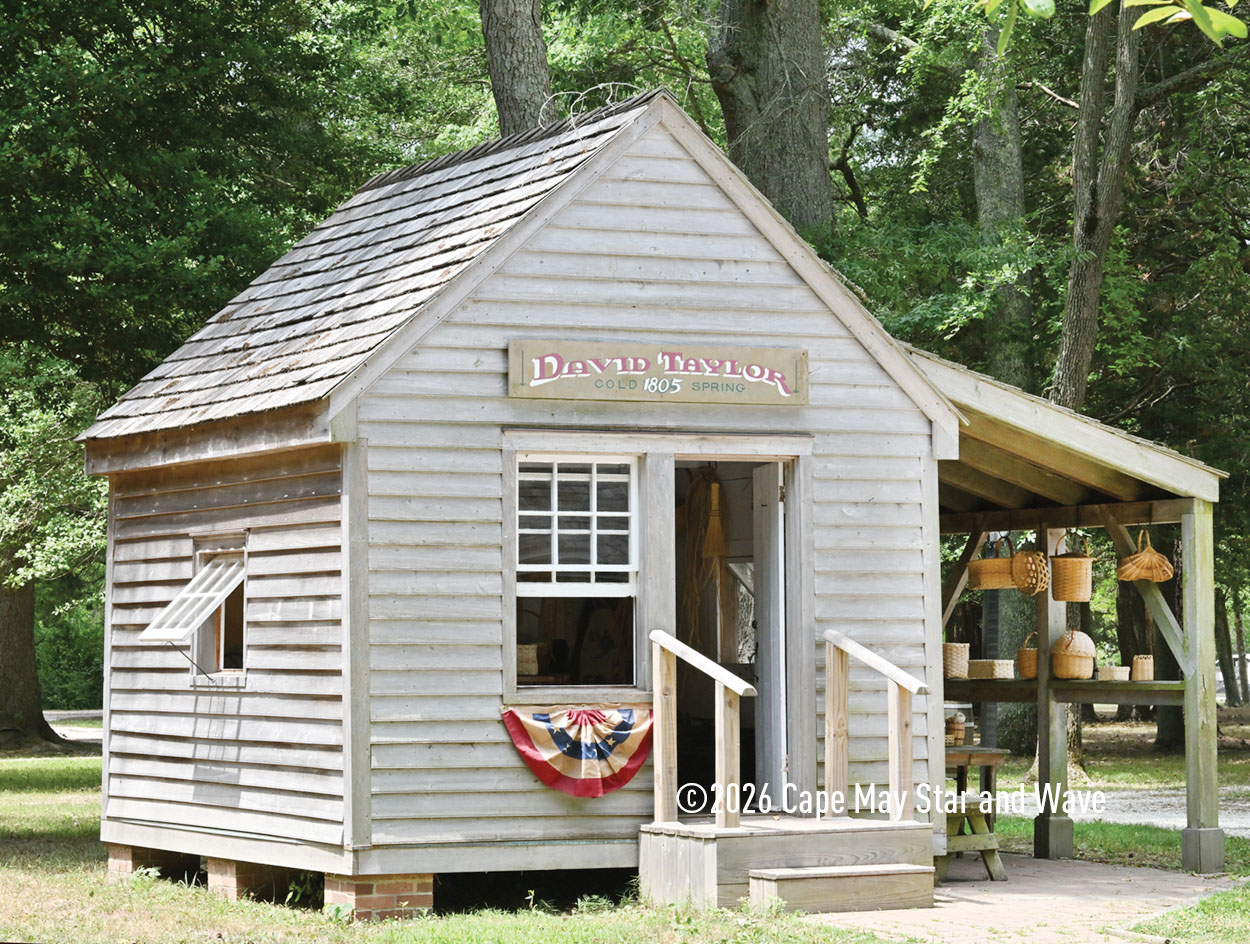
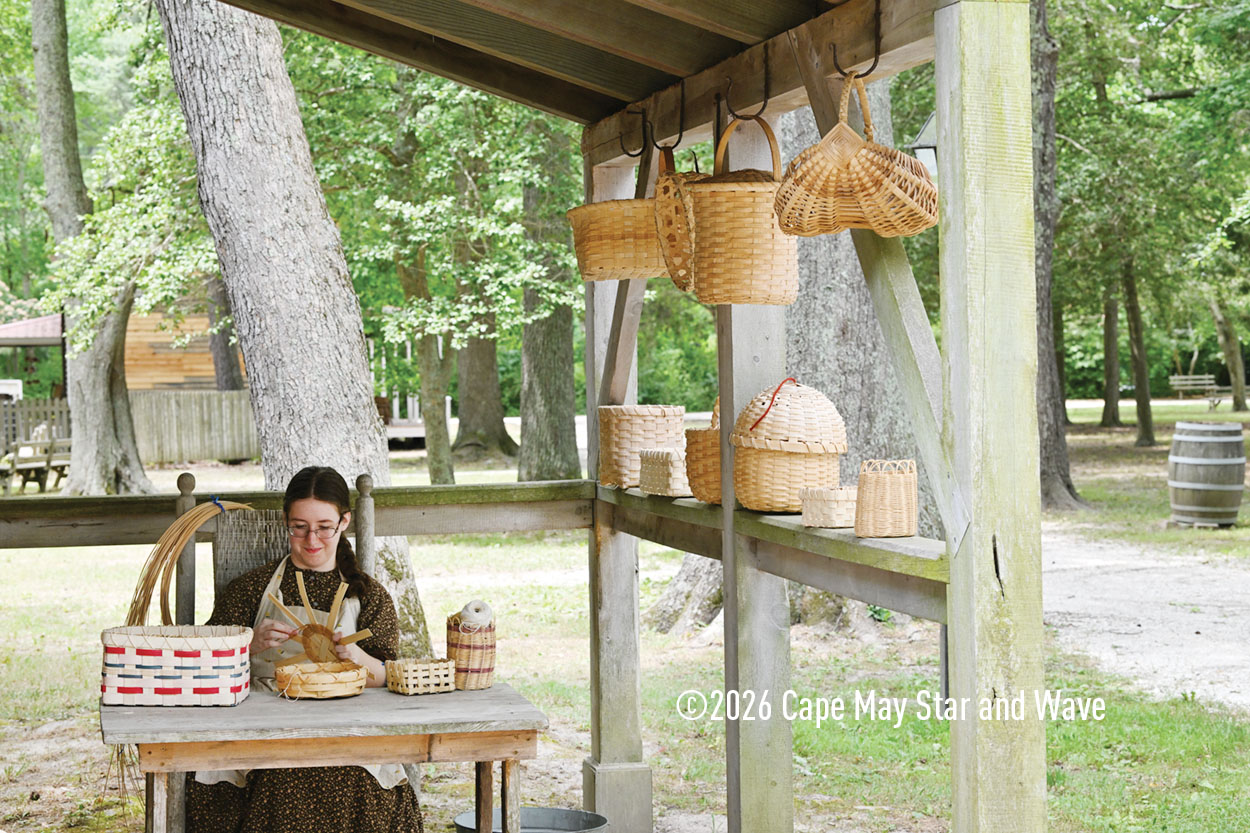
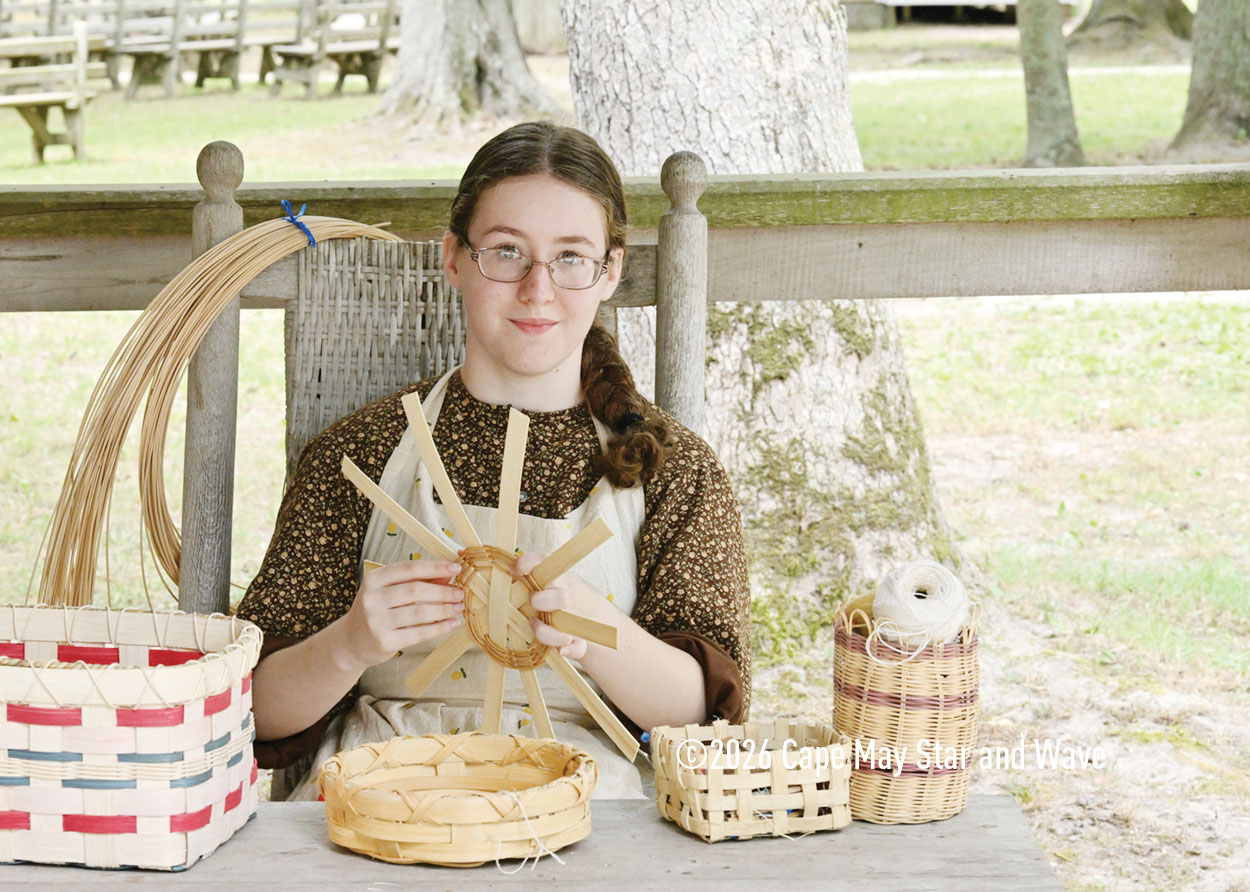
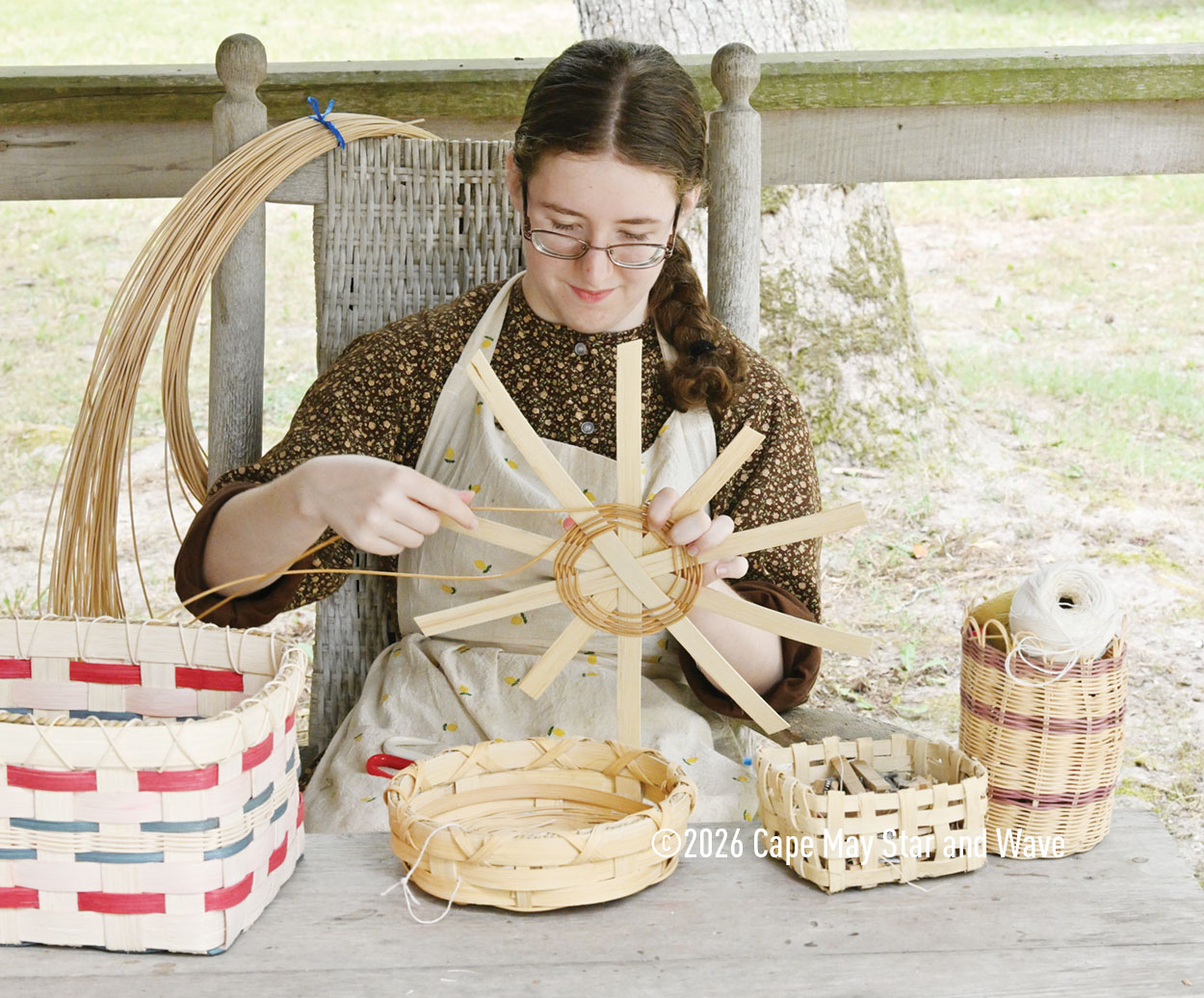
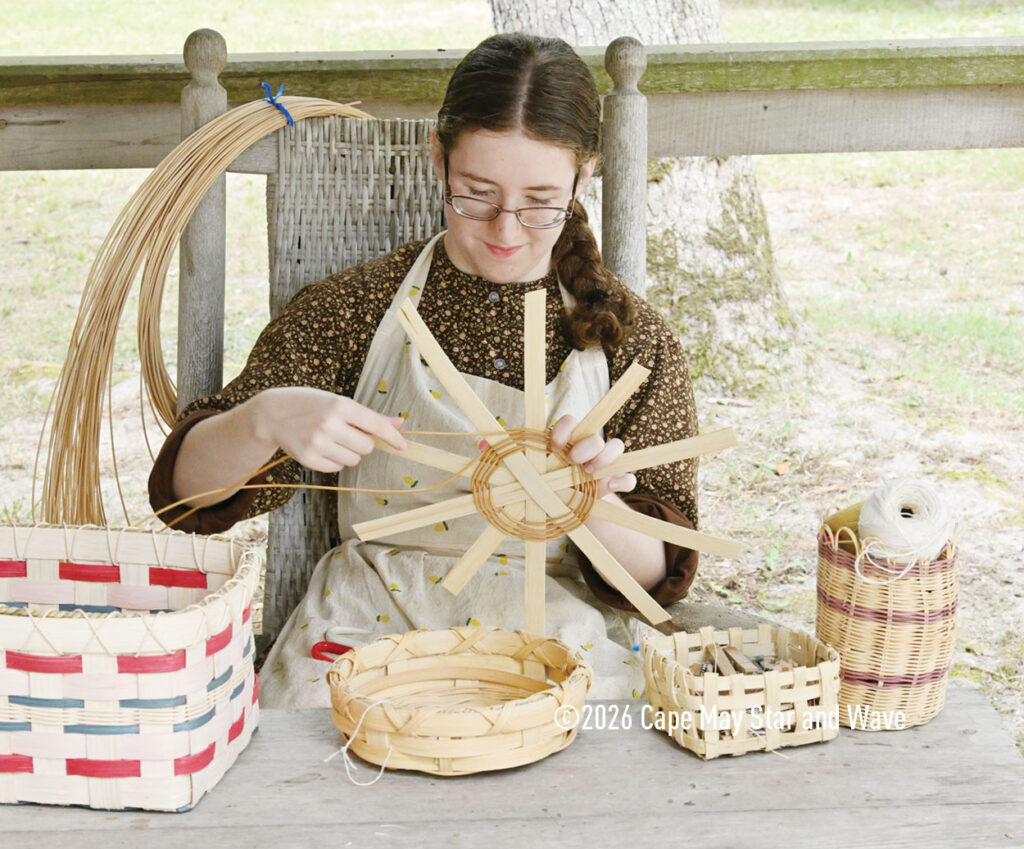
The Bertrands also visited the David Taylor Shop (c. 1830), originally a cobbler’s shop from Dennisville, where interpreters practice basket making.
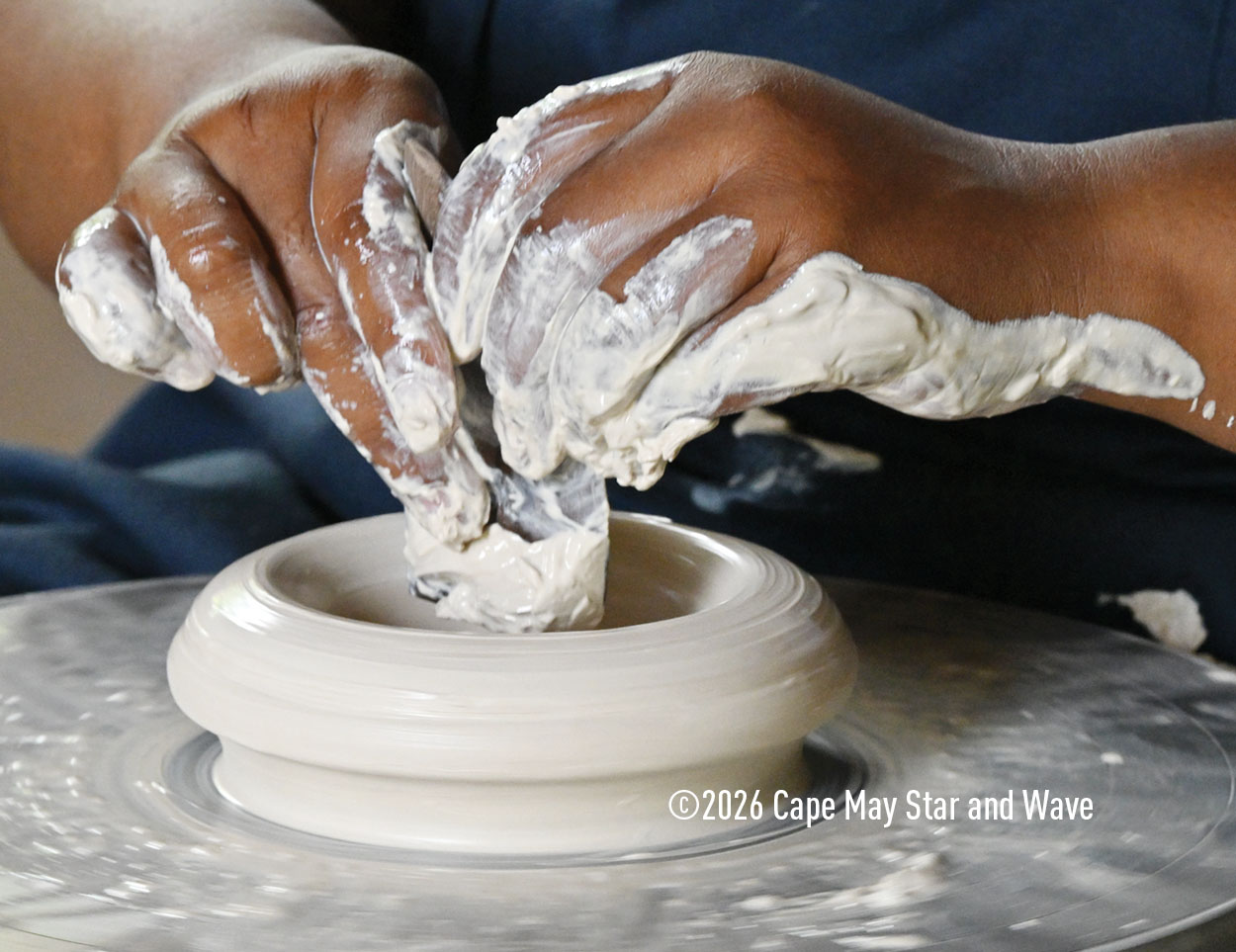
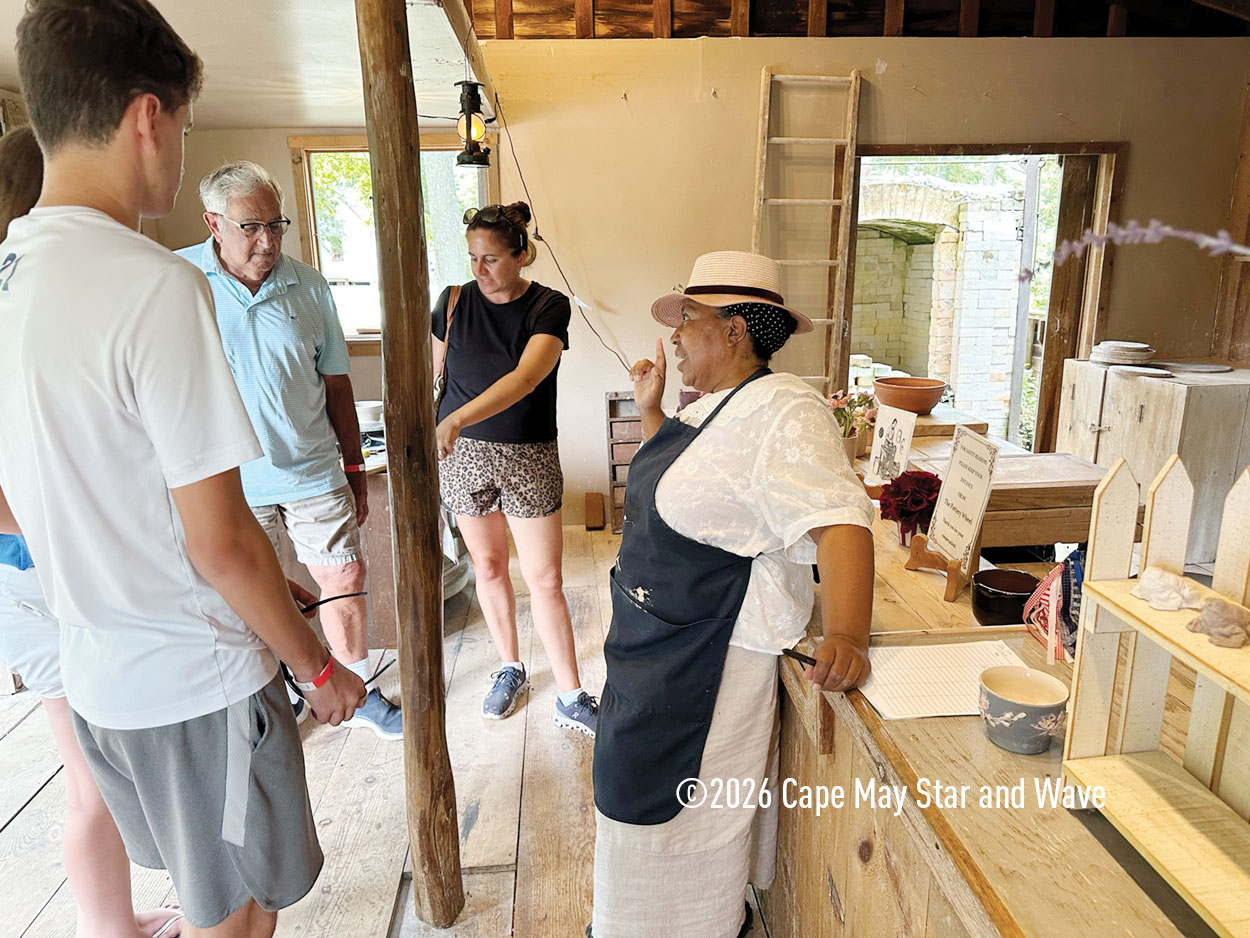
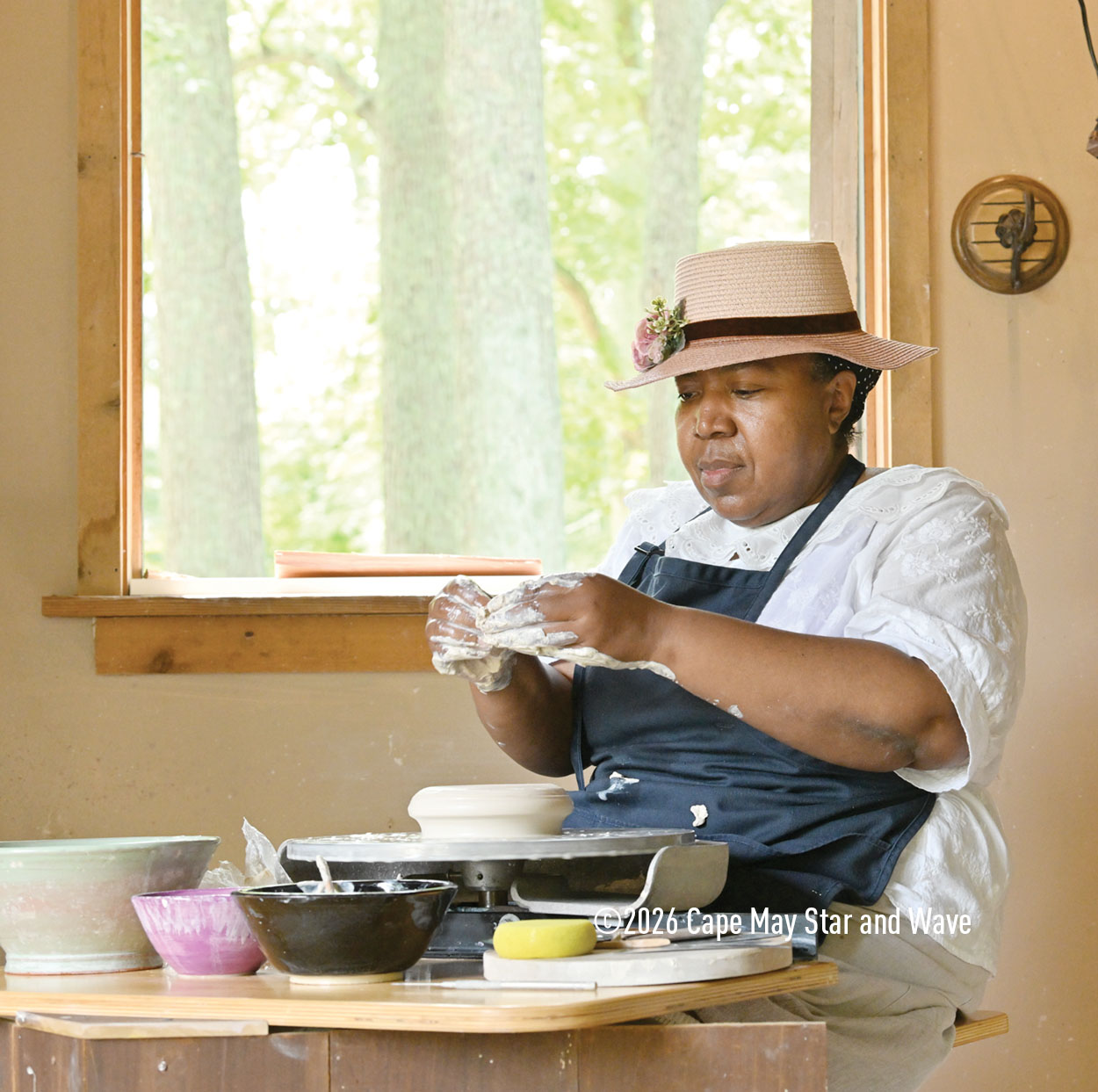
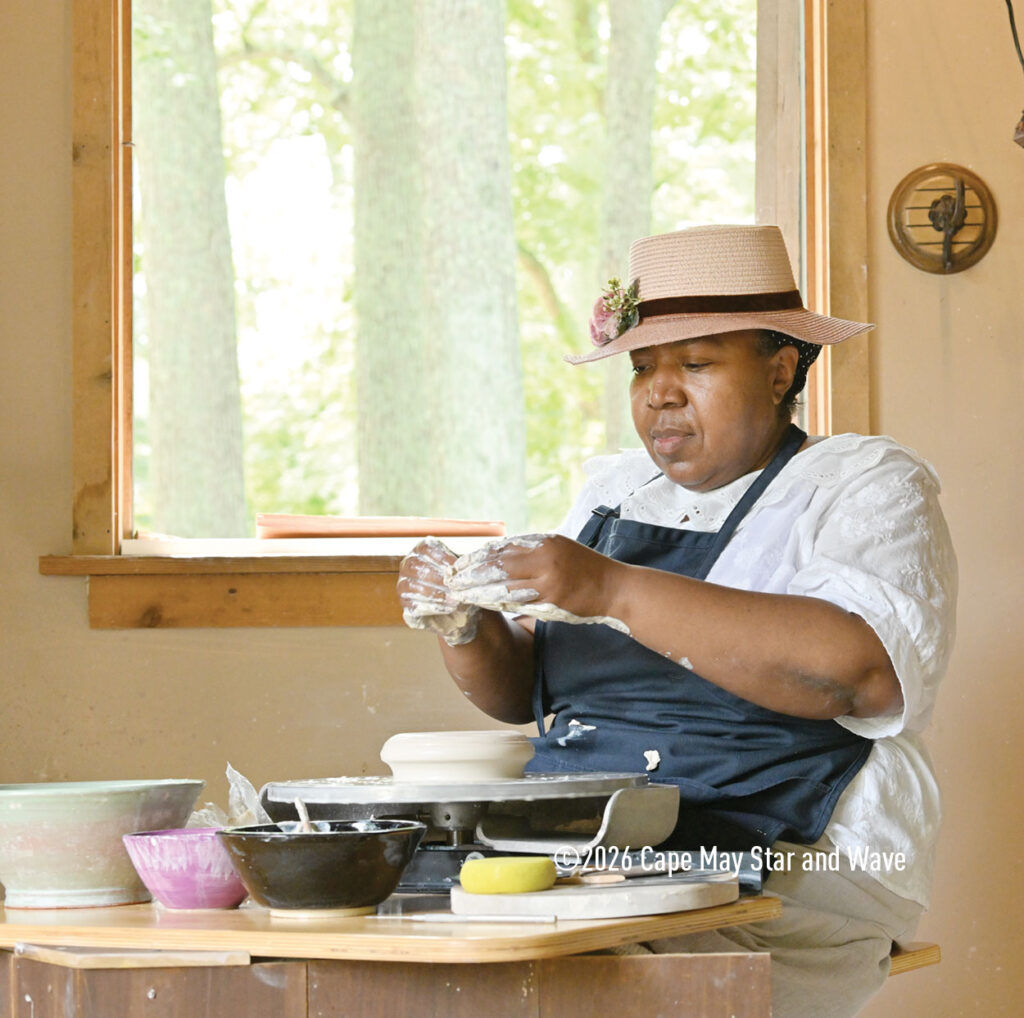
At the Pottery Shop (a reproduction building), visitors Andy Mayce and his wife Nicole of Wurtsboro, N.Y., watched the resident potter turn clay with a kick wheel. The village was a destination stop for the Mayces, who were on vacation in Wildwood.
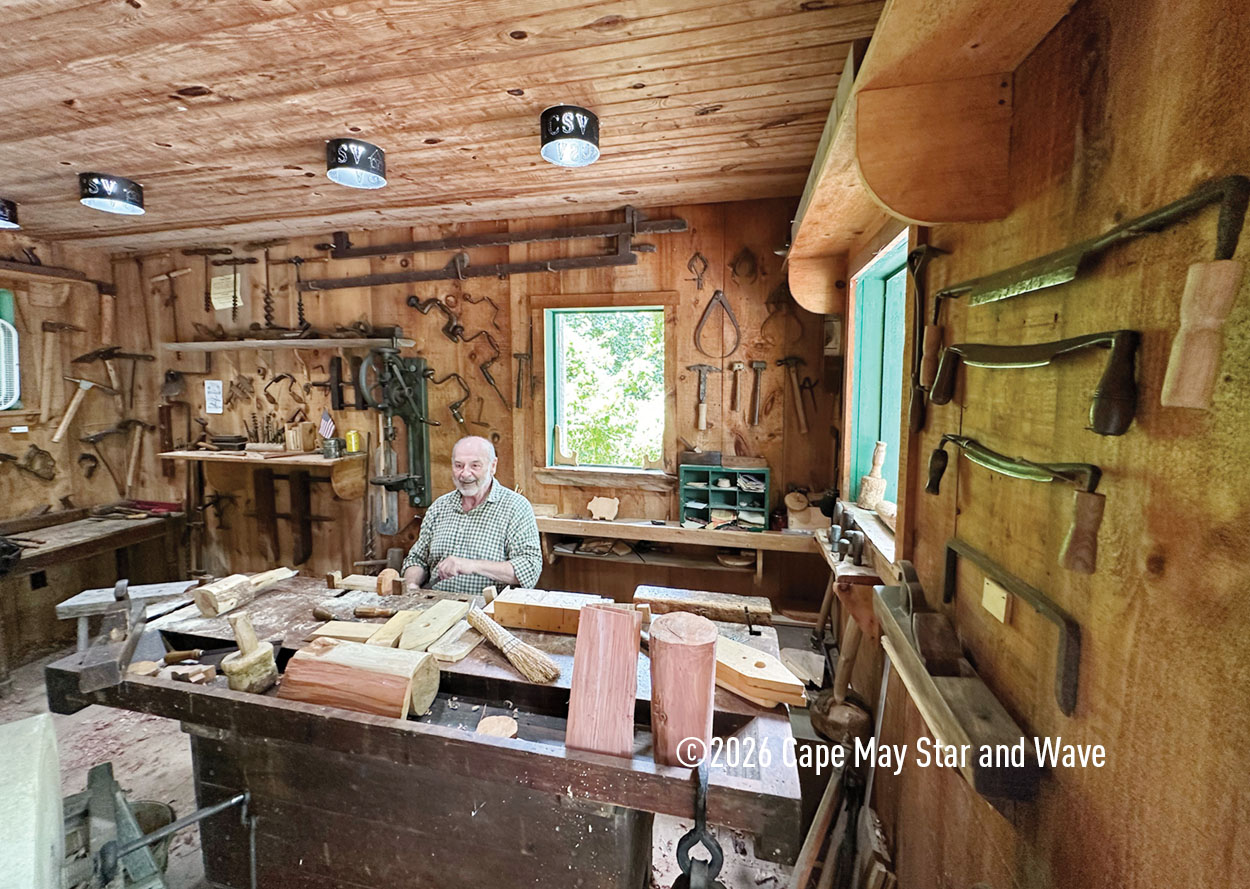
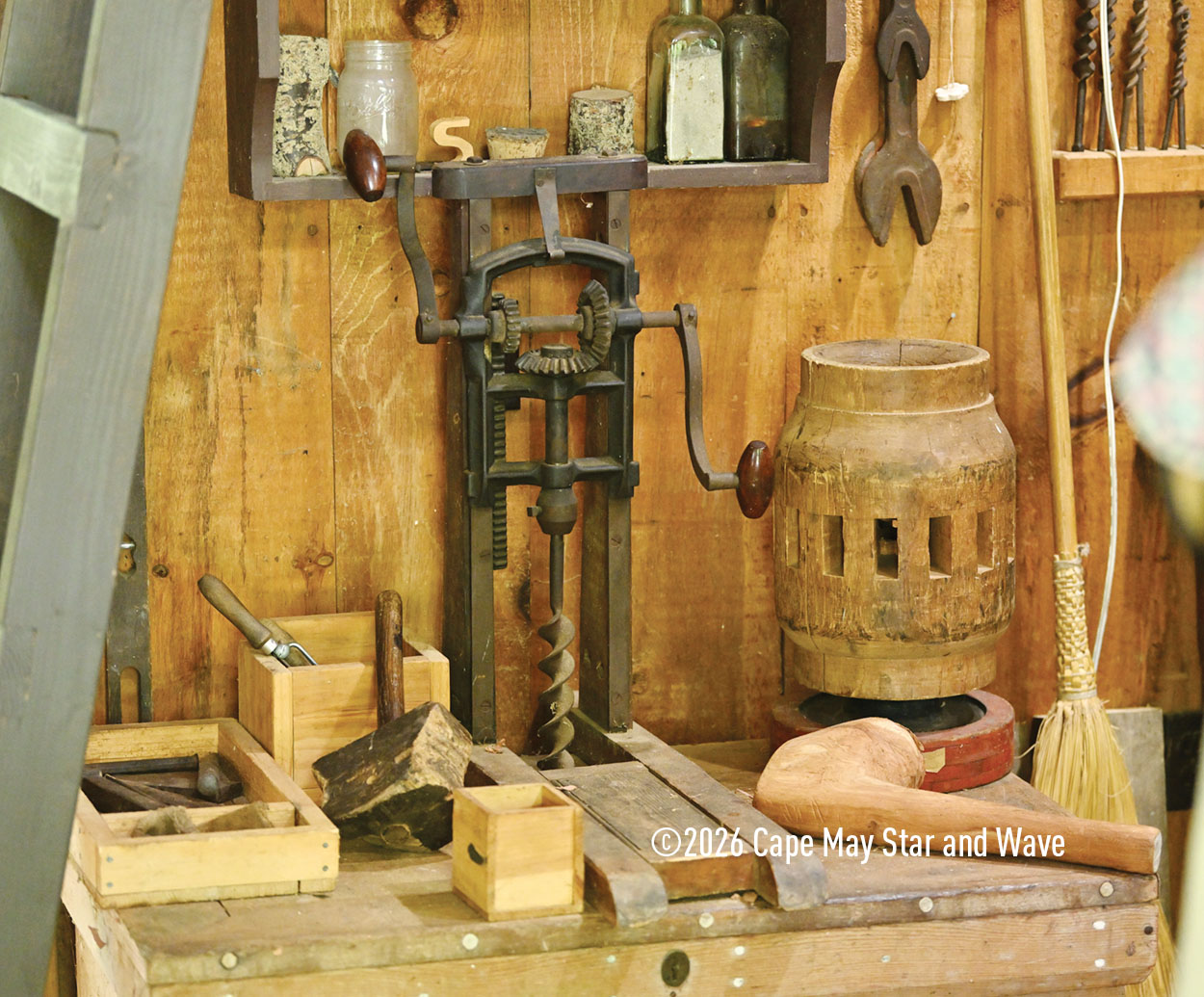
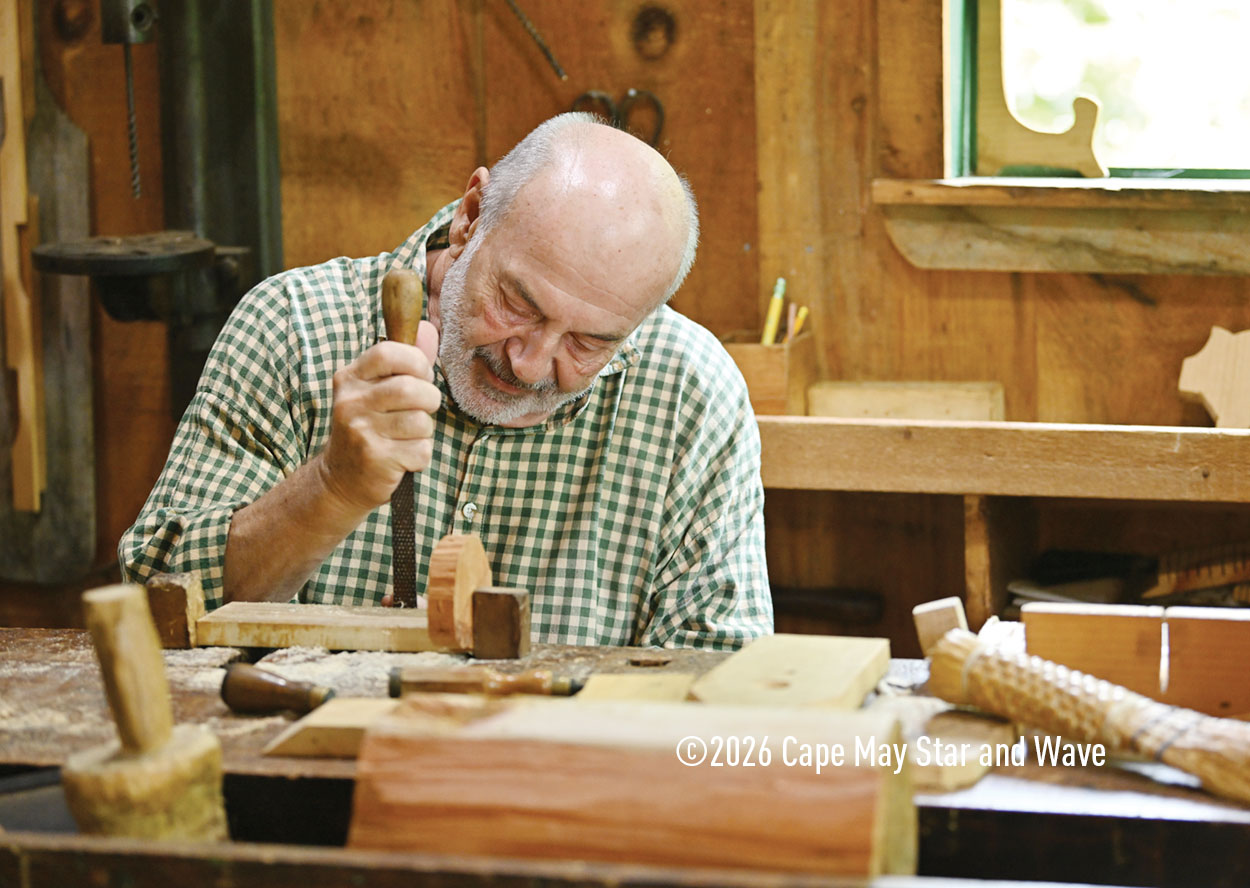
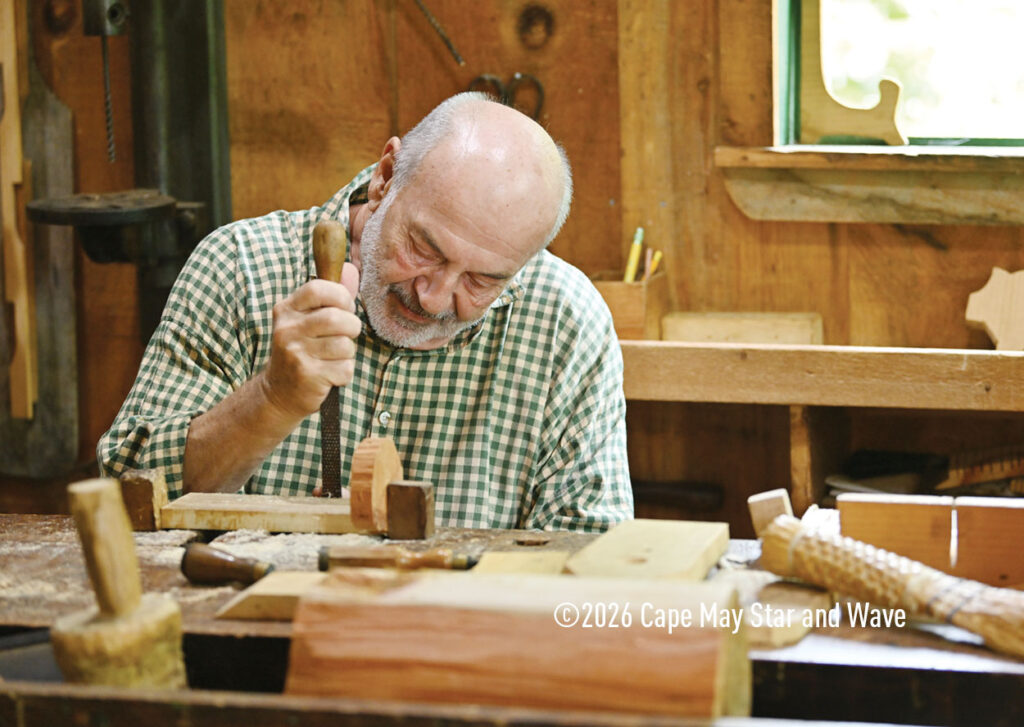
Working trade shops also include the restored Douglass Carriage House (c. 1895), where the village woodworker plies his trade; the Heislerville Store (c. 1876), where the village tinker demonstrates tinsmithing; and the Tuckahoe Shop (c. 1855), where interpreters practice bookbinding.
Other buildings
Visitors won’t want to miss:
— The Willis Barn (c. 1865), home to sheep, hens and roosters.
— The Walter Taylor Octagon Poultry House (c. 1880). Built as a brooding house for hens, the poultry house is now used for special exhibits and craft classes.
— The Lewis Corson Gandy Barn (c 1880) is home to Levi, the village horse; twin baby steer and piglets. While the Wyatt family of Woodstown, Jessica and Craig and their son Rowan, 8, was strolling through the village, Rowan pumped water for Levi. “It was tiring,” he said.
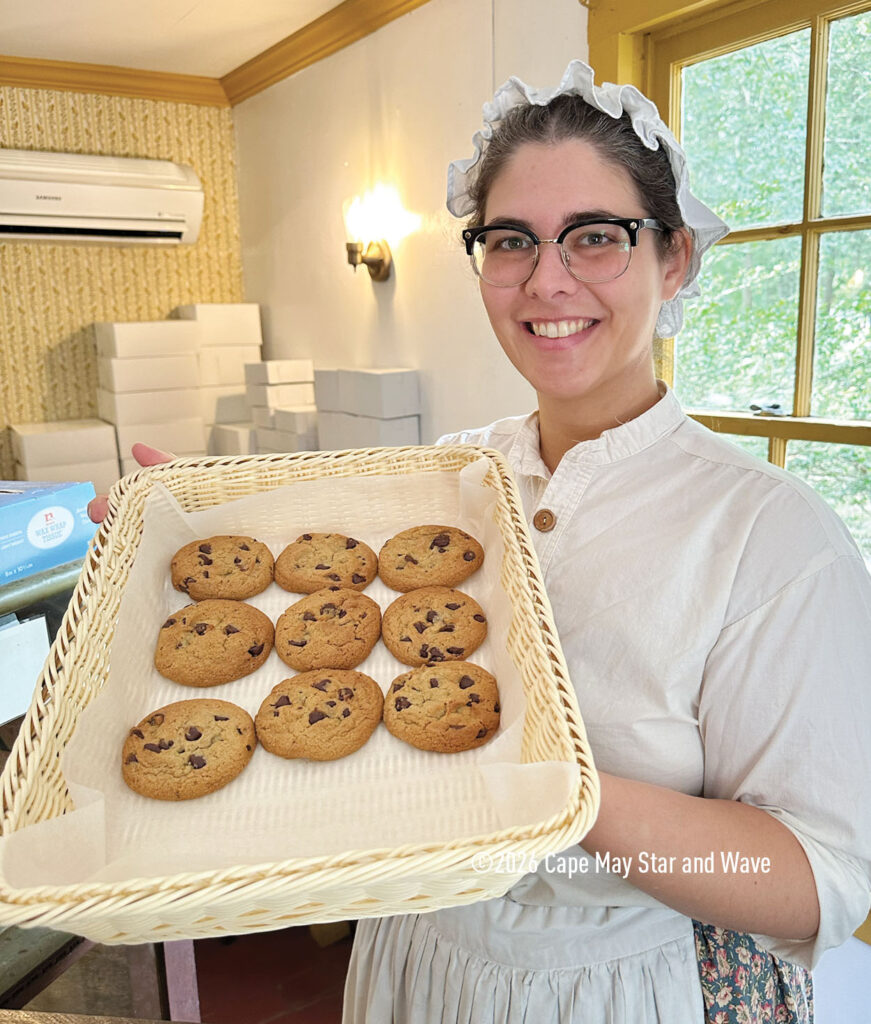
Village eateries
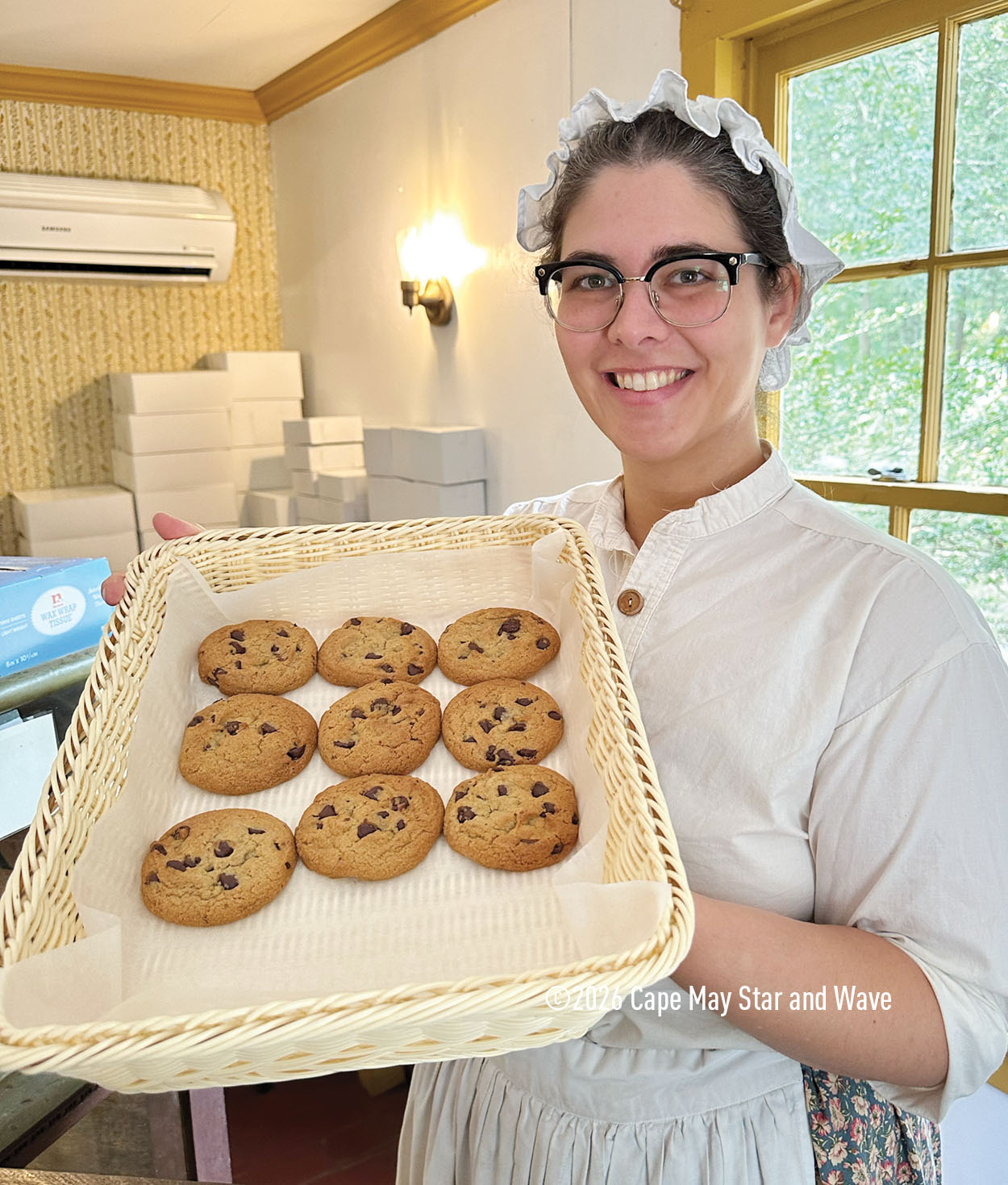
— The Ezra Norton House (c.1850)/Cold Spring Bakery
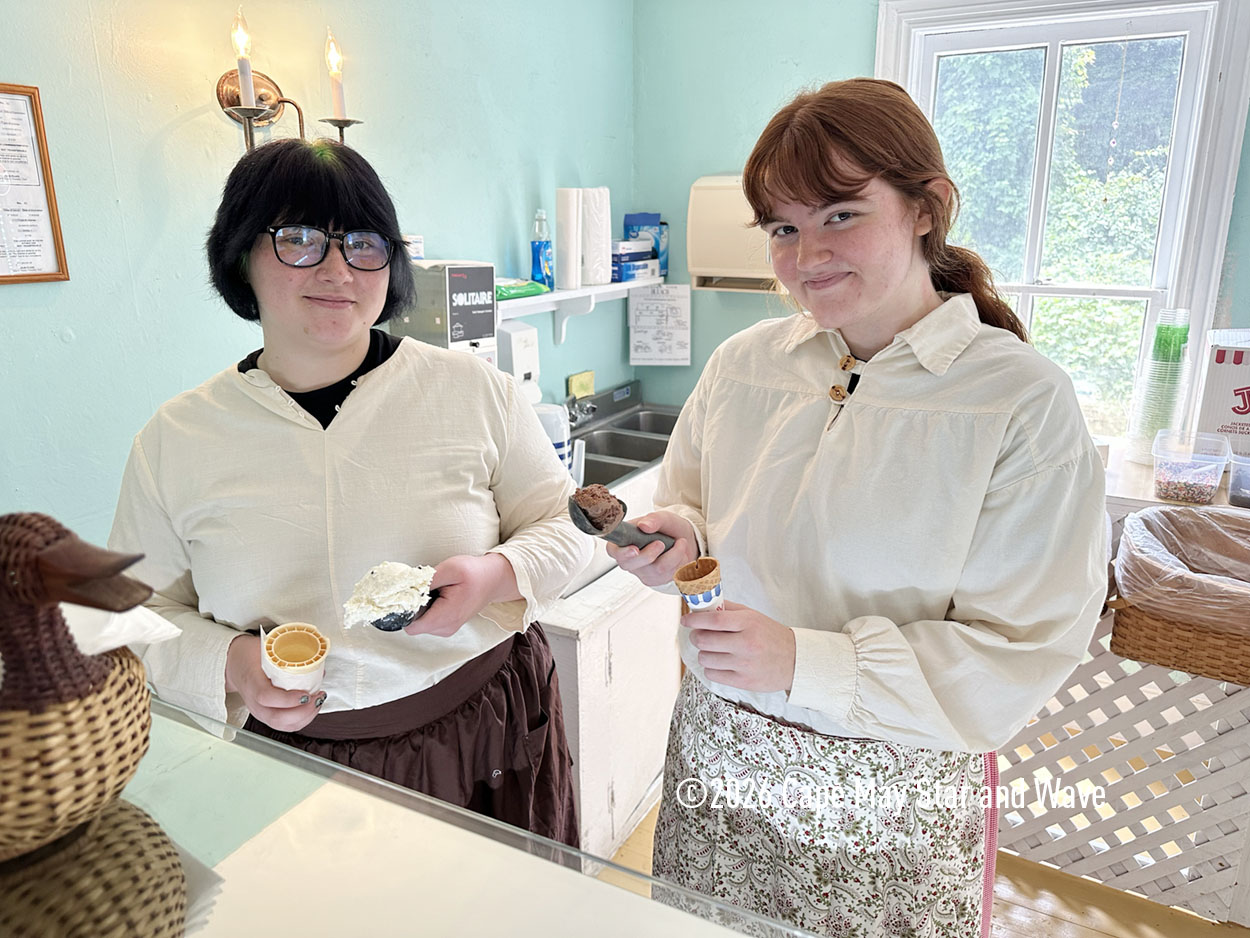
— The Ewing-Douglass House (c.1850)/Cold Spring Ice Cream shop
— The Cold Spring Grange Restaurant (for private events)
— The Village Eatery
— The Stillwell and Elizabeth Corson Barn (1804) Cold Spring Brewery. At the microbrewery, visitors can enjoy a flight of beers, including sarsaparilla, or grab a pint of one of 16 brews. The brewery, the first non-profit microbrewery in New Jersey, helps fund village preservation efforts.
Ghost watching
Aside from soaking up the history, you might want to be on the lookout for ghosts. Notably, ghost walks are available throughout the year.
Cold Spring Brewery beer tender Sarah Swain noted there’s paranormal activity on the grounds. She’s seen a bride dressed in white on the second floor of the Dennisville Inn.
“She was swaying by,” Swain said. “People who work here have seen ‘shadow people,’ dark figures whose faces you can’t see, walking around the field at nighttime. Visitors have spotted a Native American man dressed in full headgear on the roads.”
Special events
The village hosts numerous events throughout the year. Visit hcsv.org or call (609) 898-2300 for more information.
Facts to know
Admission prices: Adults, $16; children ages 4-12, $12; children 3 and under, free.
Seasonal hours of operation: 11 a.m. to 4 p.m. Thursday to Sunday through Labor Day weekend and special event weekends in the fall.
The Route 9 entrance to the village is temporarily closed. Visitors can enter on the brewery side on Seashore Road.
– STORY by ALICE URBANSKI/For the Sentinel
– PHOTOS by DAVID NAHAN/Sentinel staff