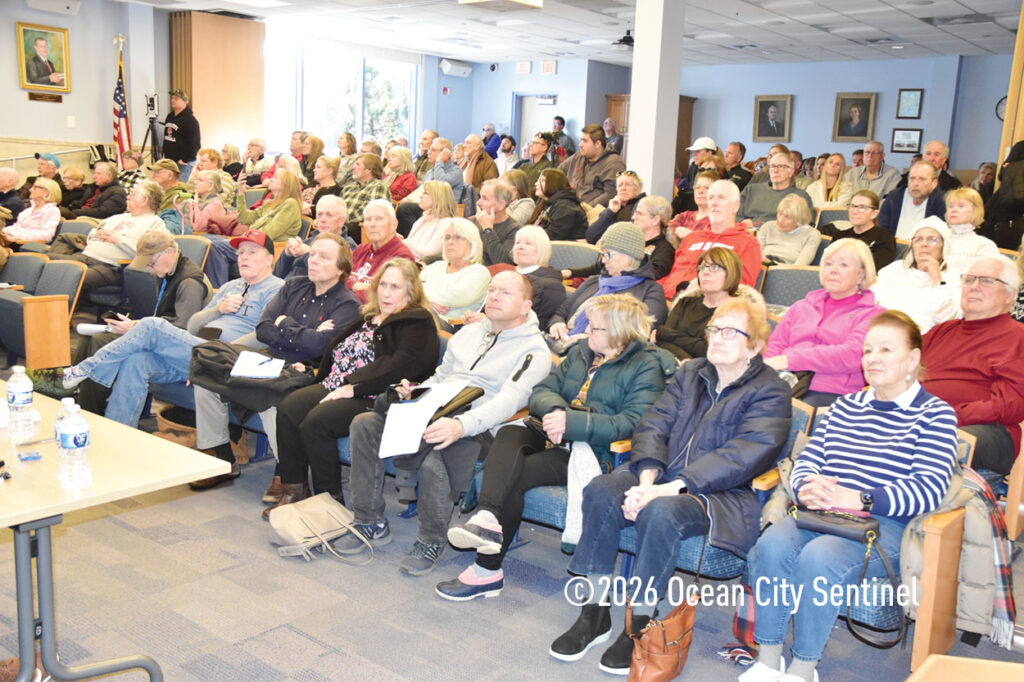
Boardwalk Subcommittee reports progress, sees impact of loss of amusement park in Ocean City
OCEAN CITY — While entertainment venues are only a minor part of offerings on the Ocean City boardwalk, the loss of the amusement park on the north end of the commercial district had a disproportionate effect on the commercial zone.
The City Council-appointed Boardwalk Subcommittee held its first informational session Feb. 7, reporting on progress since its formation in the fall.
“Ocean City has long held the title of America’s Greatest Family Resort, and our boardwalk is the heart of that identity. To ensure we protect that legacy, our subcommittee has been tasked with evaluating and modernizing the zoning policies that govern this iconic district,” spokeswoman Jocelyn Palaganas said in her introduction.
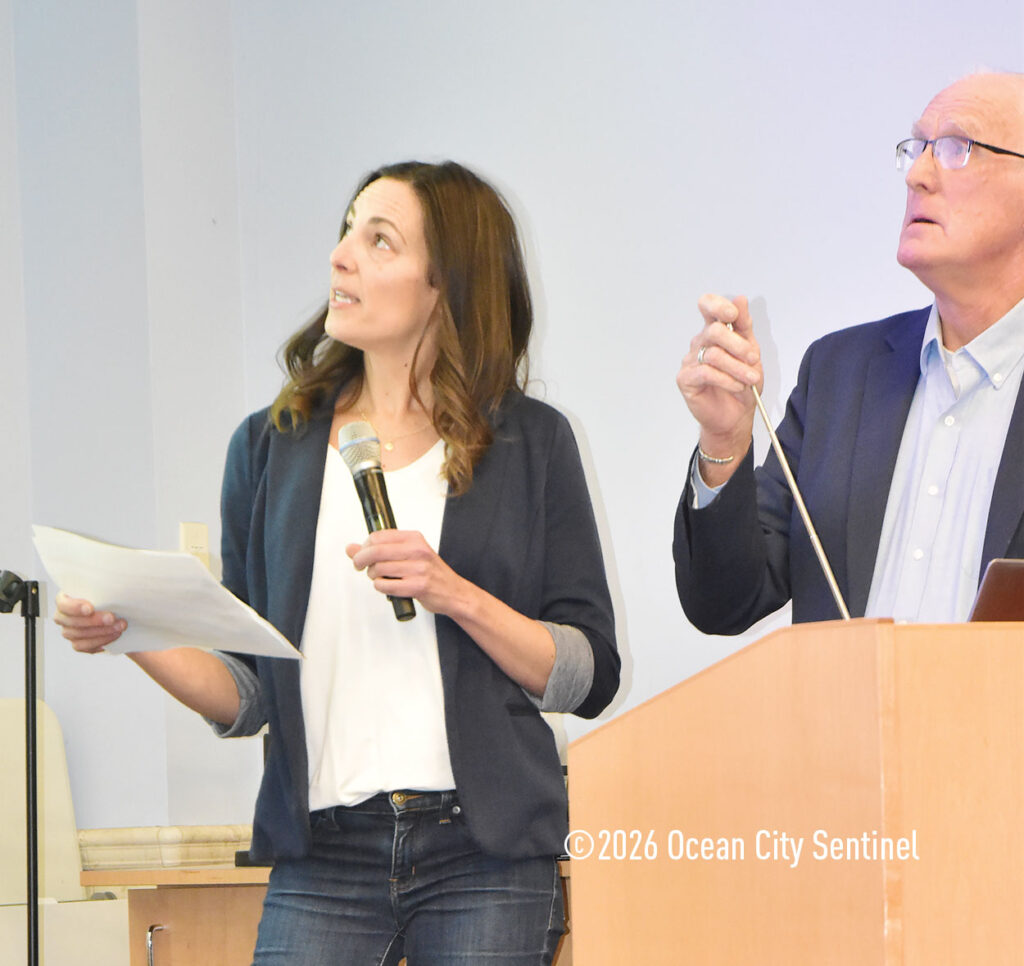
The board consists of Chairman Dave Winslow and fellow City Council members Jody Levchuk and Sean Barnes; mayoral aide Michael Allegretto; builder Dean Adams and architect Shannon Halliday, both members of the Planning Board; Wes Kazmarck, business owner and president of the Boardwalk Merchants Association; Jim Kelly, vice president of a senior living firm and representative of advocacy group Ocean City 2050; and Palaganas, a member of the Board of Education.
The group has met twice monthly since City Council President Terry Crowley Jr. announced its formation to study the Boardwalk Zone, including the former Wonderland Pier amusement park parcel that has been mostly quiet since the park closed in mid-October 2024.
Since that time, the city has been in a state of upheaval over the future of the site, where owner Eustace Mita wants to build an eight-story, 252-room hotel and opponents have proposed multiple other ideas.
The subcommittee is focused on the Boardwalk Zone, about a mile-long stretch from Sixth to 14th streets.
“Our mission is to ensure future development supports a unique mix of retail, dining and amusement, while encouraging responsible investment and year-round economic vitality,” Palaganas said. “We are here to evaluate existing regulations, preserve our family-oriented character and specifically analyze the future of the Boardwalk Zone as it relates to our long-term strategic view.”

Winslow said the subcommittee started is investigation by reviewing past city Master Plans and their recommendations.
“The boardwalk remains a planning and investment priority with ongoing efforts to update standards for vibrancy, resilience and neighborhood compatibility,” he said.
Winslow said the demographics on the island have shifted dramatically in the past 25 years, with residents getting older and wealthier.
The population fell from 15,378 to 11,219 and the median age increased from 47.8 to 57. Winslow attributed the population drop to the high cost of living and three-fold increase in real estate over that time — median home value rose from $224,700 in 2000 to $719,000, while median rent rose from $722 monthly to $1,670. At the same time, the median household income jumped from $44,158 to $101,782, according to data provided.
“That drives some of the population (loss) because people can’t afford, younger people maybe, or others cannot afford to live here,” Winslow said.
Gathering data
The subcommittee looked at boardwalk inventory by use and location, hotel data, parking data, beach tag revenue, sales tax comparison and amusement park information, along with stakeholder interviews and a Rutgers University study.
Halliday outlined permitted uses in the On-Boardwalk Zone include art galleries; bicycle rentals and sales; hobby shops; specialty clothing boutiques; antiques shops; bookstores; china, glassware and metalware shops; clothing, apparel and accessory shops; leather goods, gifts and “quite the extensive list of retail stores.”
Other uses are entertainment facilities such as miniature golf, arcades, shooting galleries and amusement rides; restaurants and food facilities as well as on-site parking and essential services.
Uses in the Hospitality Zone, which is parallel to the boardwalk, include hotel motel guest rooms, rooming houses, bed and breakfast inns, restaurant retail sales, retail service, commercial and parking lot, satellite hotels and a variety of multifamily dwellings
Regulations in the On-Boardwalk Zone restrict height to 13 feet, with a provision to allow for second stories that are set back 10 feet from the boardwalk, and allow a maximum of 80 percent impervious coverage.
Winslow said those requirements are intended to keep a low profile for the buildings on the boardwalk, noting the Gardens Plaza is the rare exception.
An inventory of boardwalk businesses found there are 168 distinct shops consisting of 25 entertainment attractions (15 percent), 51 retail shops (30 percent) and 92 food establishments.
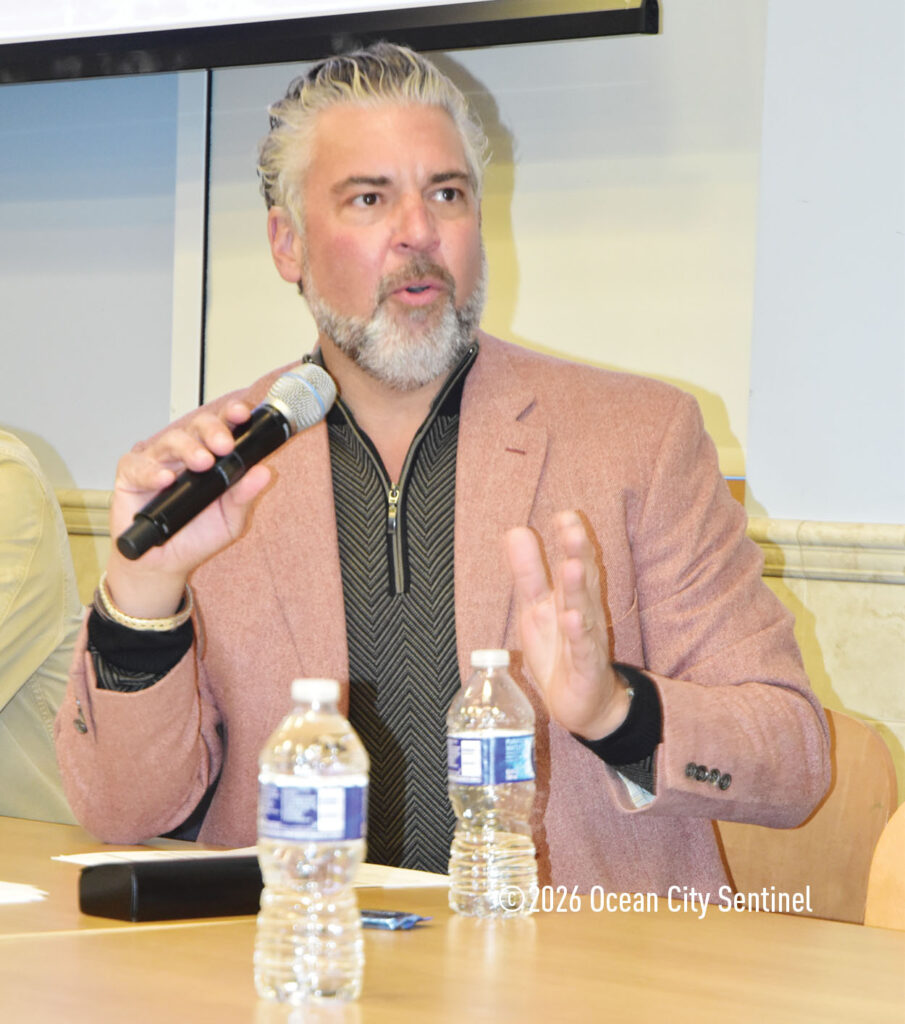
“Entertainment is really the smallest component on the boardwalk, which I think kind of struck us, kind of stood out to us,” Winslow said. “Why is that so small? Is it not affordable? Is it not viable?”
The board also looked at distribution by category and found that the three facets were spread out fairly evenly.
“You don’t have all the food together, you don’t have all the entertainment together,” he said.
The subcommittee also looked at residential properties.
“There’s been a lot of talk … about building additional housing, whatever form it may manifest itself in, on the boardwalk,” Winslow said, noting they found there already are 10 buildings with 26 housing units in the commercial area .
“There’s already existing housing. It’s not a hotel, but it’s pretty much condominium or rentals up there,” he said, noting some of it is deed-restricted or nonconforming but long has existed such as condominiums above Shriver’s Salt Water Taffy, one of Ocean City’s oldest businesses.
Winslow said Rutgers University conducted an extensive study of the Ocean City boardwalk in 2010. Its authors recommended flexible mixed-use zoning and adoption of a multi-use resort zone that focuses on building form, height and parking, allowing hotels, housing and shops to coexist while maintaining the city’s family-friendly character.
He noted the accommodations trend is to build a hotel that includes retail, dining and attractions in one spot.
One specific recommendation was to turn the Ninth Street boardwalk entrance into a welcoming gateway area that enhances the city’s identity, with low-rise hotels along the blocks leading up with parking beneath.
Through stakeholder interviews, the board learned most have the same goals:
— Preserve Ocean City’s family-friendly historic character while embracing selective modernization that strengthens, not replaces, its charm.
— Foster year-round vitality through off-season events, improved design standards and weather-resilient attractions.
— Balance tourism and local needs by keeping the boardwalk affordable, inclusive and supportive of all small businesses.
— Encourage diverse experience-driven uses, including stronger dining, cultural venues and community space, instead of repetitive retail.
— Guide growth slowly or carefully to protect the view, scales and authenticity, avoid over-commercialization and reinvest in strategic infrastructure, landmark restoration and policy updates that sustain long-term economic and cultural growth.
Key takeaways
Winslow said the subcommittee has been focused solely on data over the past couple of months.
“The data’s great, but unless you do something with it, it really doesn’t matter. So we came up with some key takeaways,” he said.
— Zoning regulations strongly shape the boardwalk experience. The variety of uses includes 168 business and 26 residential units;
— Master Plan recommendations provide an opportunity for improvement and reinvestment’
— There has been no growth in hotel rooms but there is interest in more upscale accommodations’
— There’s a need to explore innovative ways to use parking to more effectively support tourism;
The city added sensors on all public parking spaces and digital signs indicating their number and location but more must be done;
— Prioritize family-friendly character with the need for long-term economic and cultural vibrancy.
Phase I of the board’s mission, gathering data, is now complete. Phase II, issue spotting and cause analysis, is expected to be complete by mid-March; Phase III, solution development and testing, by early April and Phase IV, plan drafting, public review and submission, by the end of May.
Winslow said the board would work as quickly and efficiently as possible, knowing that time is of the essence.
“We’re going to develop potential solutions, kind of test them and see what we come up with, and estimate impacts,” Winslow said, noting the subcommittee likely would host another public meeting to get input before developing recommendations.
“If we can get it done sooner, we certainly will because we all possess the same urgency as everybody does to figure this out and have recommendations so that we can move forward.”
– STORY and PHOTOS by CRAIG D. SCHENCK/Sentinel staff