OCEAN CITY — Hawaiian surfing legend Duke Kahanamoku brought surfing to Ocean City in the 1930s, but it wasn’t until the 1960s that the sport really dropped in on the East Coast.
“People think it started in the ’70s,” John Loeper, president of the Board of Directors of the Historical Museum, told the Sentinel.
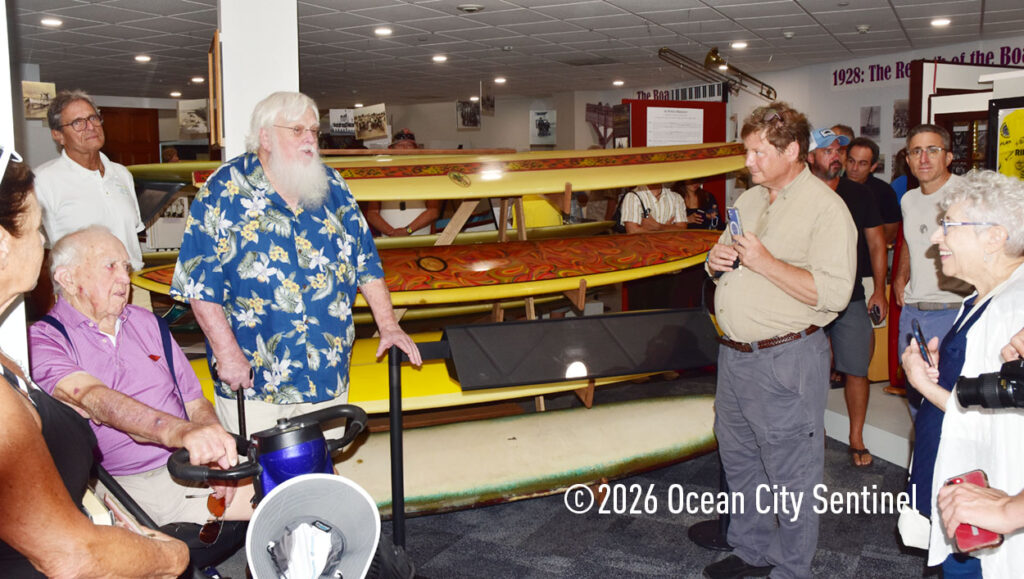
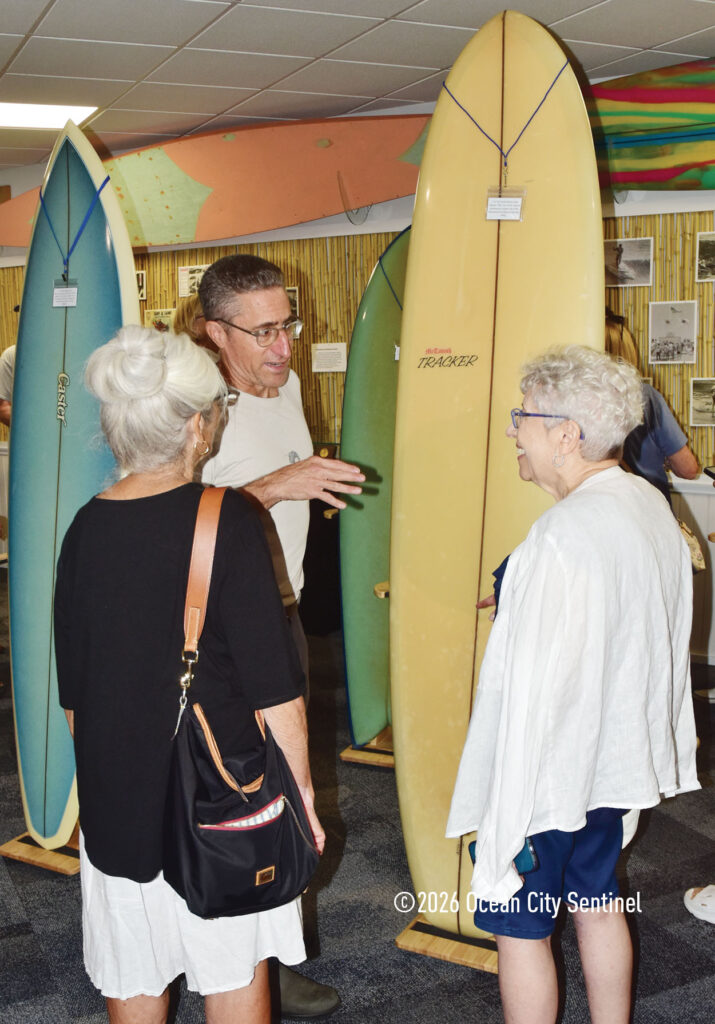
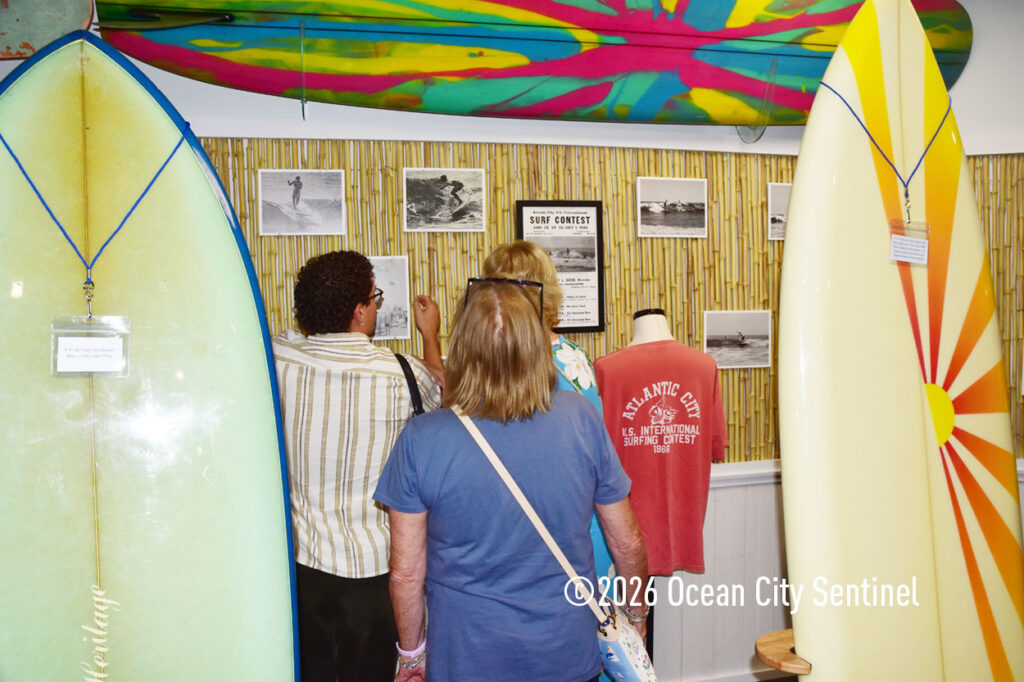
That and other tidbits of history are part of the official record now that the Ocean City Historical Museum has added a surfing display, where a grand opening was held Aug. 15.
“All the history of surfing is disappearing from Ocean City; it’s going to other places,” Loeper said. “If we don’t capture it now, none of it will be here.”
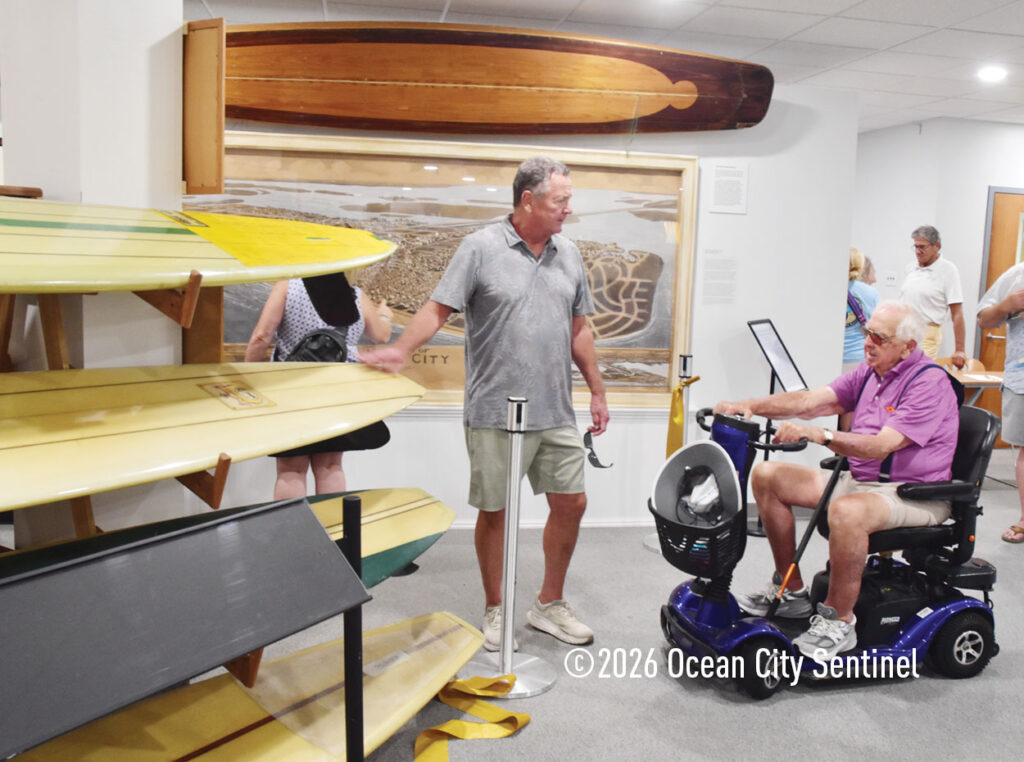
Loeper got hooked on surfing as a kid in the 1950s, learning from legendary Ocean City lifeguard and surfer John Carey, who won the National Lifeguard Overall Championship in 1934 and the National Surfboard Rescue title in 1936, according to the East Coast Surfing Hall of Fame.
Carey and Don Pileggi started the first competitive surfing program on the East Coast in the 1960s — the Ocean City Surfing Association, which was one of the first in the United States.
Loeper said surfing was so big in the resort that there were 14 surf shops on the island at one point, including the first, Surfers Supplies, which still operates at 31st Street and Asbury Avenue.
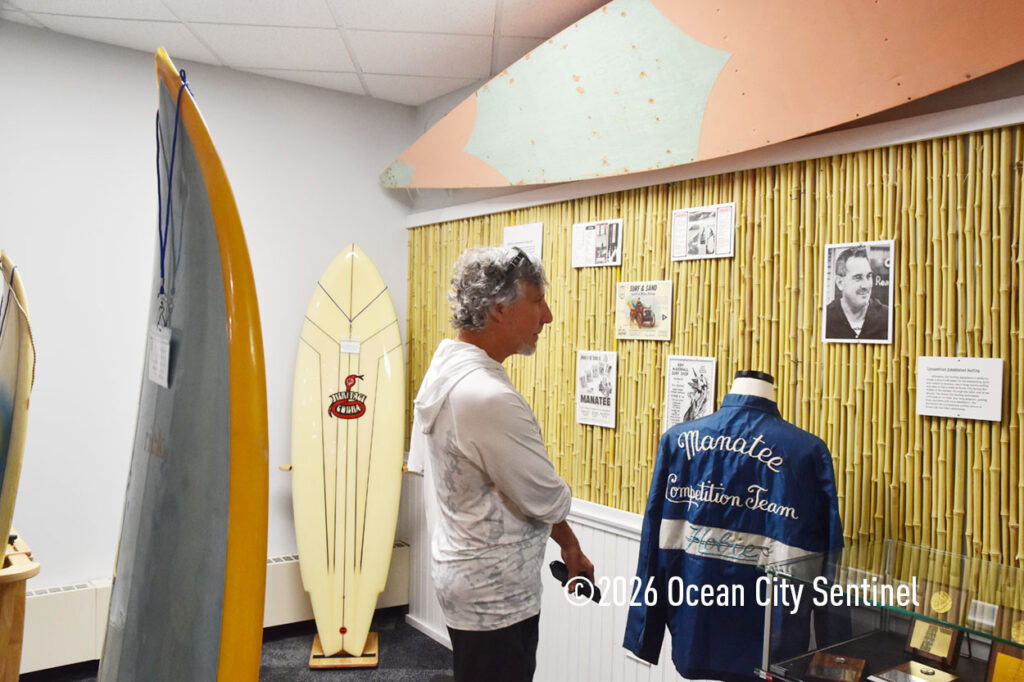
“People don’t realize that is a huge part of our culture here,” Loeper continued.
George Gerlach, a legendary surfer and father figure to surfers for decades, opened Surfers Supplies in 1962. He operated the shop until 2004, when he sold it to longtime employees. He died in 2011, but not before making his mark on the city and the sport.
The shop sets itself apart from the others simply by its history and atmosphere. The wooden floors, counter, overhead beams and changing room doors are made of scrap materials salvaged from old barns and boardwalk wood. The upstairs counter is even said to be made up in part from wood scavenged from the Sindia shipwreck.
Other shops followed and continue operating today. Heritage Surf & Sport was founded in 1962 by Dan Heritage, a Hall of Fame surfer and renowned surfboard shaper. Heritage opened a rental concession in Ocean City and ran a small store in his hometown of Vineland in 1963. The next year, he opened his first store in Sea Isle, Little Wave Surf Shop, where he sold surfboards.
In the late 1960s, Heritage began manufacturing boards full time. He opened his second location, in Ocean City, in 1978.
Larry and Becky Friedel opened 7th Street Surf Shop’s first location in 1986 on the Boardwalk overlooking the surfing beach and now have multiple locations in the city, offering everything from surfboards, wetsuits and apparel to skateboards, paddleboards and other gear.
According to the museum’s website, it is home to treasures from before Ocean City’s founding in 1879 to the city’s recent past.
“From shipwrecks to princesses, religious piety to entrepreneurial spirit, Ocean City’s story is shared with more than 10,000 visitors yearly,” the site states. “We invite you to visit us and explore our extensive collection of Ocean City artifacts and attend our many events.”
The historical museum, which is located in the Ocean City Community Center at 17th Street and Simpson Avenue, called on the surfing community to donate items for the display, which includes boards, equipment and ephemera, including copies of Surfing magazine dating to the first issue.
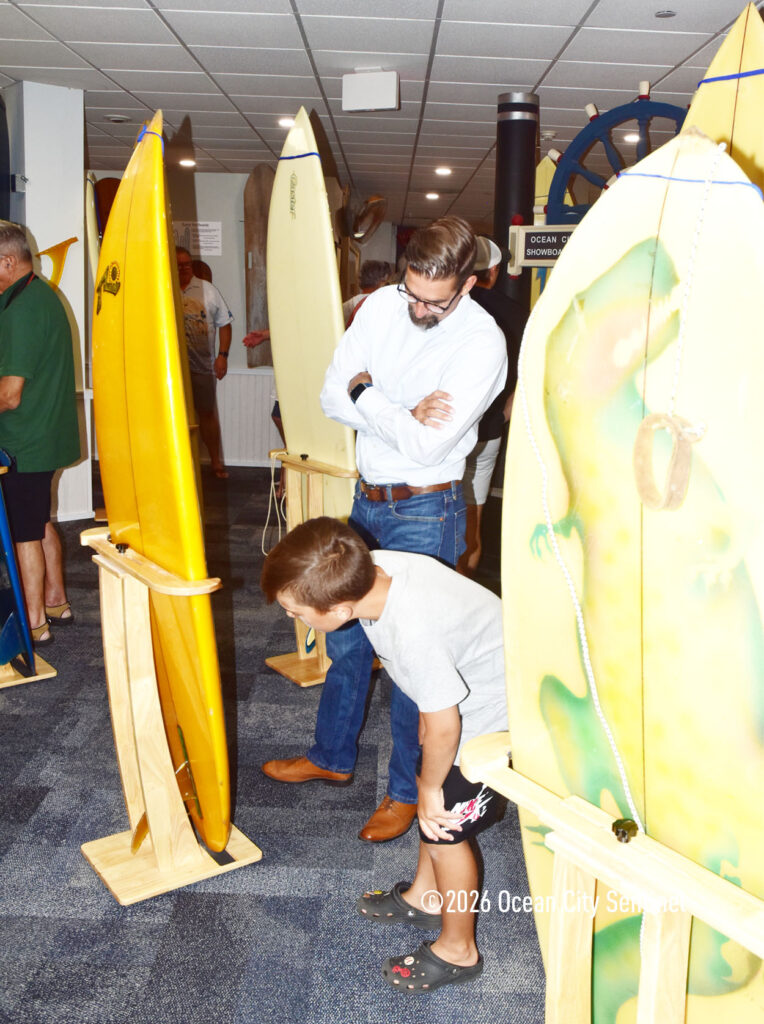
The exhibit, “Surfin’ OCNJ,” features about 18 surfboards, a lot of memorabilia “and we are still growing it,” Loeper said. “Every time we talk about it, more and more stuff comes in from the public.”
Loeper said they have a picture of former lifeguard John B. Kelly with four surfboards and that they were able to acquire all four hollow wood boards from the 1930s.
Loeper said an intern for the museum this summer, Rutgers-Camden graduate student Tom DiGiovanni, researched the history of surfing and wrote his thesis paper on the leisure culture in New Jersey through the lens of surfing.
“At the same time, we had a donation of $120,000 of memorabilia — we have all the Surfing magazines, 200 books on surfing. That was a good research database for Tom to jump into to help himself and us. It all kind of melded together,” Loeper said. “All that history is there, we just have to gather it up in one bag and present it to public, and that’s what we’ve done.”
DiGiovanni found that the main factor that led to acceptance of surfing at the shore was the surfing associations, in particular the Ocean City Surfing Association.
He said the group was successful at “selling surfing as a healthy sport and provided a place where people could find organized surfing that was orderly, respectful, clean cut — all of the key words important to acceptance in the middle-class white place that was Ocean City and the Jersey Shore.”
A native of Portland, Maine, DiGiovanni’s grandmother lives in Somers Point and he has family in Avalon.
Loeper said the museum had a surfing display 10 to 15 years ago, resulting in its largest group of visitors ever, about 10,000 people.
“I think this will spur the museum into another direction,” he said, noting 40,000 to 50,000 people visit the island every year for history tourism.
He said it is imperative to collect this information before it’s too late.
“I decided this was the time to do it because everybody is aging out. Another 10 years and all of these guys will be gone,” Loeper said.
– STORY and PHOTOS by CRAIG D. SCHENCK/Sentinel staff