Fed agency teams with Ocean Positive Foundation on video series to keep people safe in the ocean
OCEAN CITY — The National Oceanic and Atmospheric Association (NOAA) partnered with the Smithsonian Institution and the Ocean Positive Foundation — headed by local resident and ocean expert Bruckner Chase — to create videos warning of threats in coastal waters.
“Beaches are fun, but there can be hidden dangers, even on sunny, storm-free days. The safest beach day begins with preparation,” Chase said in the release last week from NOAA. “Coastal visitors may travel to the beach only once or twice a year, making them unfamiliar with local wave dynamics and currents.”
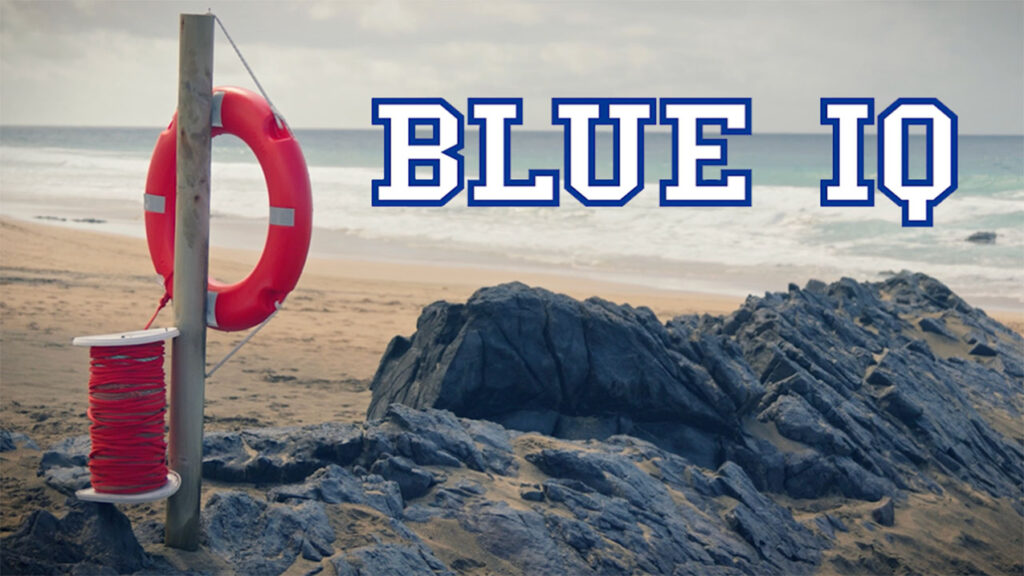
The series of five short, social media-friendly videos is called “Know Your Blue IQ.”
The titles are: “Not Sure? Stay on Shore,” “Staying Safe in Ocean Currents,” “Playing Safe in the Waves,” “Keeping Yourself and Others Safe” and “Check the Weather, Water and Waves.” They run for about a minute and a half to two minutes.
Because they are designed for people who aren’t familiar with the ocean, some of the videos change the context, using athletes from Rice University (Chase’s alma mater) in different sports to demonstrate the ocean’s power and dangers.
As one example, Chase is on a football sled being pushed by two big players to show that the force of a 2-foot wave packs 500 pounds of pressure. Another video advises college students to learn about the weather and water conditions to make a better decision.
“We’re not saying, ‘Don’t go to the beach,’” Chase said about the times when conditions in the surf are unsafe. “We’re saying, ‘Just throw a football around or something.’”
NOAA reports there were 878 fatalities from 2014 to 2024 connected to beach hazards, including rip currents and high surf, with most of them coming in June and July. That’s why the federal agency is pushing the videos in advance of the July 4 holiday.
NOAA noted most of the victims were male, ages 10 to 29. Chase said the numbers rise dramatically when near-drownings and serious injuries are figured into the count.
Chase told the Sentinel when they studied the demographics of people getting in trouble in the ocean a few years ago, they discovered people relied on their peers to help them decide what to do or not do.
“We use Rice University student athletes to both translate the power of waves, power of current, situational awareness, from the less common ocean situation that a lot of Americans are not familiar with … and use sports analogies from stuff that most people are familiar with — football, basketball, soccer, swimming — to kind of translate that into context” with the ocean, Chase said.
“We kind of looked at how do we make the science of the weather or the waves make sense to them, to what it’s going to feel like for me, what it’s going to feel like for my kids,” he added, and have them make better decisions.
Chase, a former resident of Ocean City who now lives in Somers Point, said he often appears on television, including The Weather Channel, and hears reporters saying these things should be common sense.
That’s a myth, he said, for those who aren’t familiar.
“In order for something to be common sense, someone has to have a shared common experience and a common understanding of that experience,” he explained. “And if you’ve never been to the ocean before, it’s not common sense to always look behind you for a wave coming up.”
The NOAA series shows there is a “disconnect” between actual ocean conditions and hazards and what beach-goers think they know about their own swimming strengths and beach safety.
“Beaches are special places where families make memories each summer season across the country,” Nicole LeBoeuf, director of NOAA’s National Ocean Service, said in the release. “But data shows that people often overestimate their ability to swim in ocean waves, so education and preparation are key elements of beach safety.”
“Before visiting the beach, check all weather information, including wave and surf zone forecasts,” Ken Graham, director of NOAA’s National Weather Service, said in the release. “Know before you go! It’s key to staying safe and ensuring a fun experience at the coast.”
Chase said educating beach-goers is the ultimate goal.
“We want to make sure people have positive experiences,” he said of the shared focus of NOAA, the Smithsonian and the Ocean Positive Foundation. They want to eliminate not just fatal drownings, but traumatic injuries and traumatic experiences.
“I’d love to keep lifeguards dry because everyone makes really good decisions,” Chase said.
The series is available online at https://oceantoday.noaa.gov/blueiq/welcome.html.
To learn more about Chase’s organization, go online to bcoceanpositive.org.
– By DAVID NAHAN/Sentinel staff
Graphic courtesy of NOAA