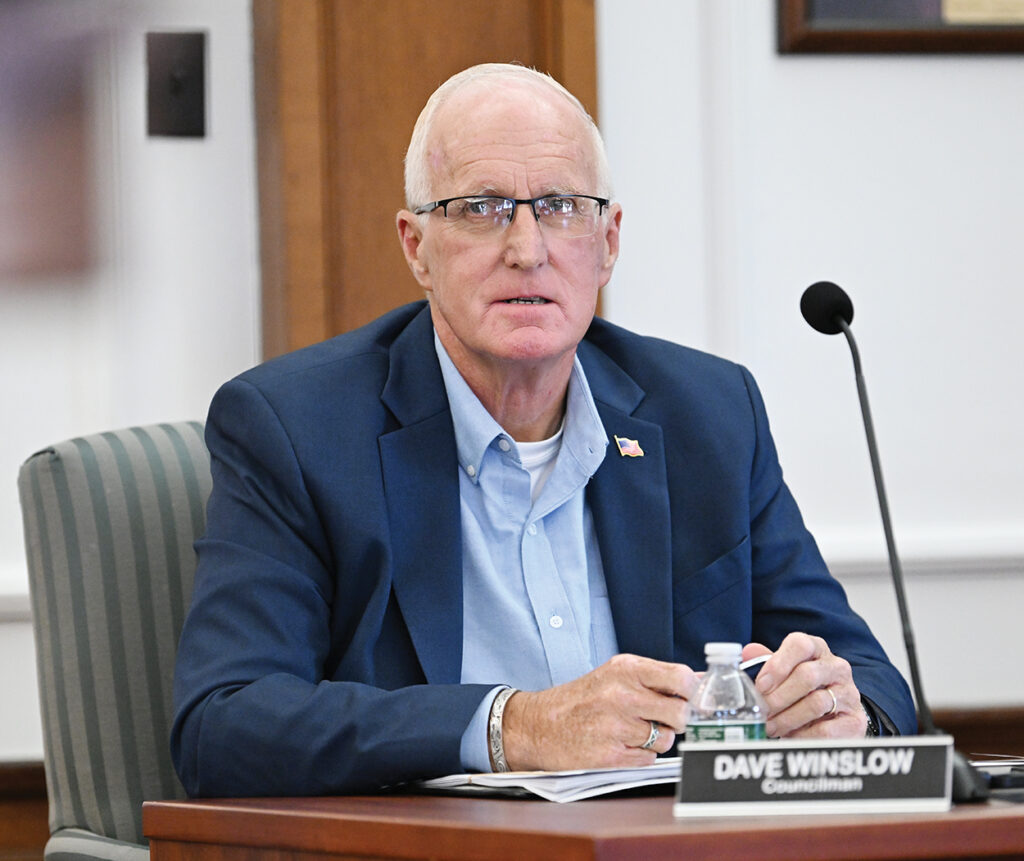
Winslow offers path to improve efficiencies going forward; mayor freezes hiring
OCEAN CITY — Mayor Jay Gillian delivered the news of the night at the City Council meeting on May 8, saying the city would institute a hiring freeze going forward in response to concerns about the ever-rising city budget.
Fourth Ward Councilman Dave Winslow, however, had the most to say about city budgeting, putting forward an extensive multi-point plan to make the city more efficient to keep costs down.
At the start of the meeting last Thursday evening, Gillian said he was instituting a freeze on all new hires except for those required by contract or law, and was committed to working with council members on all budget issues moving forward.
Gillian’s comments came before council would vote to approve the 2025-26 municipal budget that has spending of $112 million and will raise the tax rate 3.7 cents per $100 of assessed valuation. The new budget will cost the average homeowner of a $650,000 property $242 more in the coming year.
The current municipal budget also raised the tax rate the same amount. Critics have complained over the past few council meetings that the tax rate has risen 17 percent over the past three years and that is even with the city having ever-increasing ratables to offset even higher tax increases.
The city grew by about $174 million in new ratables over the past year. The current total assessed value of property in the resort is $12.9 billion.
Winslow offered a lengthy talk about the state of the budget process, saying the city “now has the opportunity to become more efficient in how we spend tax dollars” and how to manage one of the most significant expenses — labor.
He said salary and wages alone make up 36 percent of the annual budget ($38.94 million) and when benefits are factored in, that goes up to 45 percent, or just over $50 million — almost half of the $112 million in spending.
In just the past year, salary and wage expenses rose 4.52 percent, he said.
Winslow said he would “be remiss” by not pointing out areas where the city could improve without offering suggestions. He used his background in human resources management at the executive level to learn how to do more with less.
He said a disciplined and methodical approach is needed to maximize the workforce. Winslow said at this time it made sense to achieve efficiencies rather than do across-the-board layoffs. He then went point by point on a strategic plan for the administration:
1. Hiring and promotion freeze that would be effective immediately, except for critical and seasonal positions such as lifeguards and beach tag checkers; stop converting part-time employees to full-time until a labor analysis is complete; and if a position is open for six months or more, promoted no significant overtime, eliminate it.
2. Increase the use of technology. The city plans to upgrade its time and attendance system that keeps track of hours and pay rates. Currently it is not fully integrated or implemented for all employees. Expand this beyond the 110 part-time seasonal employees to all 286 full-time employees. That will eliminate manual tracking on paper, saving labor and reducing the potential for error. It also will allow scheduling reports to be created and exception reports generated for review and corrective action. Human Resources and payroll practices could become totally paperless and the platform could provide means for feedback to employees on their performance.
3. Staffing models. Complete a labor analysis, department by department, and determine minimum and maximum staffing models and use a variable labor model to target ideal staffing levels at any given time of the year. Use FTE (full time equivalents) for a more accurate way of establishing manpower needs.
4. Labor contracts. The negotiated labor contracts for most of the city’s workforce are in force for several more years and provide an automatic 3 percent wage increase, which accounts for a large portion of the expense increase in the budget. The 3 percent is not out of line with national norms. “In recent years, longevity payments have been reduced and I recommend the city continue to look at ways to reduce labor expense while not hurting employees.”
5. Legacy wages. Many long-term loyal hardworking employees who by the length of their employment garner wages that are called legacy wages, or wages more than typically paid for certain positions. There are creative ways to better manage legacy wages while not hurting the employee financially.
6. Establish a Compensation/Compliance Committee with a diverse group of members, including a member of City Council (“not me”) to review a number of employment-related issues including: additions to staff, open positions no longer needed, request for salary adjustment, reorganization/restructuring requests, nepotism/perceived nepotism in the hiring process, and other HR policies needed or questions of compliance with the policy. This neutral, independent committee, if structured correctly, can ensure objectivity, void of any conflicts of interest.
7. Labor and expense financial reviews. Recommendation: The mayor, business administrator and CFO hold a monthly meeting with department heads and all managers in the department to review the respective department’s monthly labor expense, staffing levels, overtime justification, operating expenses. The departments should provide justification for any variances. This meeting will also provide the CFO an opportunity to re-forecast the budget for the remainder of the year.
8. Training because well-trained employees are more motivated employees, more productive, more engaged, and derive a sense of satisfactions for a good day of work and speak highly of the employer.
Develop a robust set of employee training and development programs for all levels, not just technical training, but leadership training to help with succession planning and overall performance.
After thanking Chief Financial Officer Frank Donato, whom he said “endured” his “incessant” questioning and requests for information and provided his expertise, Winslow offered an adage, “Is it nice or is it necessary?”
That, he said, should be “in the front of mind for all employees and ingrained in the culture throughout the year.”
He concluded by saying considering the options he presented “will go a long way to seeing improved efficiencies and reduced expense, something that all businesses should strive for.”
Other members of council praised him for his thoroughness.
– By DAVID NAHAN/Sentinel staff